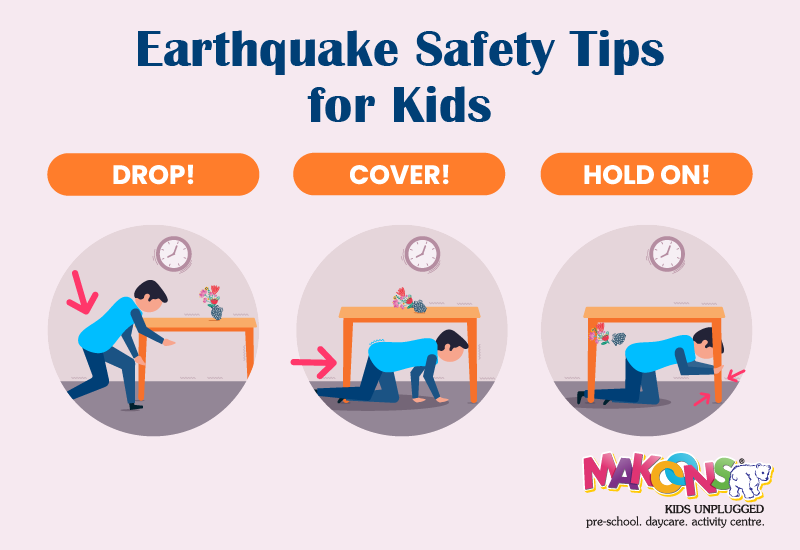
Natural disasters happen unexpectedly, such as earthquakes, so the family, particularly families with small children, must be prepared. During emergencies, children are the most susceptible parties and therefore parents have the most important role to play in guaranteeing their safety. This guide will give you all the earthquake safety tips on kids, which is inclusive of child earthquake preparedness to quick exercises programs that are earthquake drilling specific to preschool, so you can confidently increase your children’s protection.
Why Earthquake Preparedness is important to Kids?
When a child does not comprehend the consequences of a bothersome disaster, like an earthquake, they are very vulnerable to fear, confusion and loss of control. Avoiding panic and safety can occur by teaching them what to do in advance. A trained child is not only safer during the real shaking but he/she is also more calm.
The essential reasons behind earthquake preparedness among the kids:
- Children, in most cases, rely on adults.
- Being used to the safety drills creates confidence.
- Younger siblings will want to be calmer, and prepared children will assist in this.
Earthquake Safety Tips for Kids at Home
At home, earthquake safety tips to kids are to hold on to something sturdy, such as a table, until the shaking stops.
Parents need to make sure that the home is child-friendly and safe during an earthquake. The doable steps are as follows:
1. Anchor Furniture and heavy items
- Mount bookshelves and cabinets, televisions to the walls.
- Have the heavy objects on the bottom shelves where they cannot drop on children.
2. Create No- Comment Zones
- Find hiding places in each room: under a heavy table or against an interior wall away there are no windows.
- Send kids to these locations as they move fast in case of an earthquake.
3. Learn to do drop, cover and hold on
- Show the children to go on the ground on their hands and knees, and to cover head and neck, hold onto something solid.
- Put fun in it by integrating practice into a game.
4. Clear up Pathways
- Remove toys and clutter in hallways and exits in order to trip hazards.
Earthquake Drills for Preschool and Home
In the real quake, seconds may mean the difference between life and death. Parents need to educate children the following fundamental rules
Indoors: Fall, crouch down and fight against furniture. Keep away windows and glass.
Outside: Go outside to an open area such as away from trees, poles or structures.
In a Car: Pull over in a safe spot that is free of bridges, trees and power lines. Remain indoors until shaking is over
Earthquake in Preschool Children at Home
The trick to safety lies in regular practice.
At Preschool:
School personnel must perform earthquake exercises at least a couple of times in a year. Make your child as active as possible and as a parent discuss what they learnt at home.
At Home:
Conduct practice drills on a monthly basis Make it interactive- pretend that an earthquake has started and time them to see how fast kids reach their safe zone.
Role-Playing Scenarios:
Rehearse what to do should an earthquake happen when you are in bed, at the washroom, or having dinner.
Besides earthquakes, as disaster preparedness measures among the children.
Although parents are encouraged to prepare kids about earthquakes, they should also plan them on how to handle other kinds of emergencies, these include fire or floods. Developing an overall feeling of disaster preparedness in children will help them provide responses in unexpected situations without feeling frazzled.
Helping the Children in Emotionally Following an Earthquake
Survival of an earthquake is morally taxing Children can be frightened or nervous afterwards Parents should:
- Be reassuring and physically caring.
- Encourage children to talk or make drawings or play about the way they feel.
- Keep up normal routines in order to help regain some form of normal.
Checklist of an Earthquake Emergency Kit with Kids
This is a brief checklist:
- Child-sized water bottles, preferably
- Other snacks (my own granola bars, crackers)
- First-aid kit (medications, bandages that are child-safe)
- Battery and flashlight
- Spare clothes
- Security doll or blanket
- Whistle (to get help called)
- Face masks, and hand sanitizers
- Parent contact card information
Final Thoughts
Educating children to respond to earthquake disasters is not meant to create fear but it may instill confidence into them so they can deal with whatever they discover. Parents who make the time to practice drills, develop emergency kits, and explain to their children the safety measures clearly will make their kids safer, in the event of a disaster. When it comes to the appropriate balance between preparation and reassurance, families can endure earthquakes.
Read Also : Essential preschool emergency kit 2025 – A safety guide
Earthquake Safety Frequently Asked Questions by Kids
What can parents do to emotionally ready children in the
Explain things in an encouraging way. Teach extracellular learning activities in the form of games so parents and children resonate preparedness without fear.
What must an earthquake emergency kit have in it that is part of the kids?
Items such as; clear water, food, first aid, flashlight, clothing, and comfort items, and an emergency contact card should not be left behind.
How many earthquake drills should families run with their children?
The regular drills at school should also be involved and at least once a month at home.
How can one make young people inescapably safe during an earthquake in preschool institutions?
Teachers and parents must direct them to safe areas as fast as possible, exercise drills as regularly as possible, and offer calm confidence to them during the occurrence.







 Twitter