Understanding Early Childhood Education Stages
Varieties of different educational programs especially created for young children from birth to 8 years of age are included in the early childhood education plan .
The most notable phases are consist of:
- Preschool (also known as nursery)
- Kindergarten (also called KG or transitional classes)
It has a distinct specialized function in a child’s growth. The main distinctions are found in the child’s age, the focus they have, the type of structure, and multiple objectives of the programme.
What is Preschool?
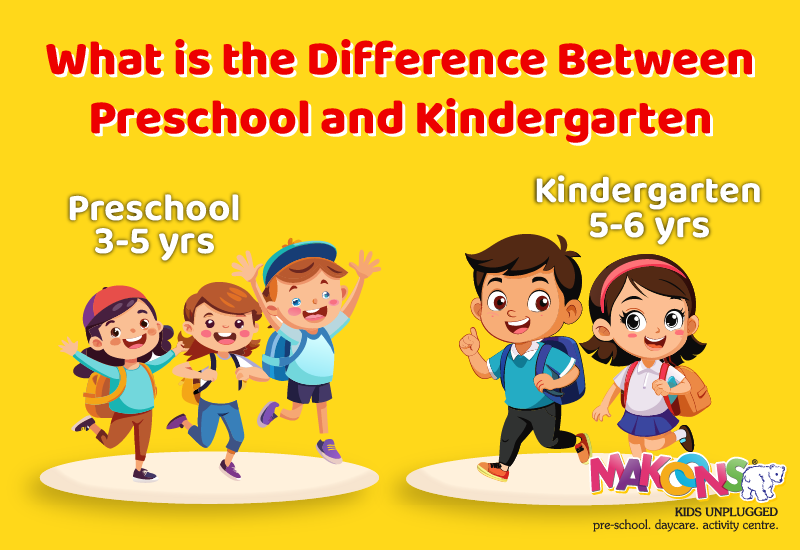
Preschool is an early learning setting for young children, between the ages of two and four. It is the first organised and structured environment in which kids are exposed directly to group learning. Also ,kids as young as 18 months are accepted at certain preschools.
Although it is not at all mandatory and required, preschool is strongly advised for every kid since it helps them to settle into a routine of continuous learning before starting formal and structured schooling. Here, the basic fundamental social, emotional, and motor skills are prioritised over rigorous academic growth.
Preschoolers learn the most through hands-on exploration on different things , storytelling, music, and also play-based activities.
They acquire and embed vital abilities such as:
- Listening and following guided instructions.
- Sharing and taking turn by turn.
- Basic counting and recognition of letters
- Fine and gross motor skills and coordination
- Emotional expression and communication
- Preschool is mainly about teaching kids how to learn the basics in an enjoyable and secure setting.
What is Kindergarten?
It depends on the nation or region’s educational system, kindergarten is basically the next step after completing preschool as children aged 4-6 took admission in kindergarten. It is the first step towards formal education and may even be required in many nations.
As compared to preschool, kindergarten has a more structured curriculum. It makes children both socially and academically ready for primary school.
Kindergarten’s primary focus areas are as follows:
- Basic reading and writing
- Simple math concepts
- Language development
- Problem-solving skills
- Independence and responsibility
- Group projects and class participation
Kindergarten provides more than just teacher-led structure lessons, individual assignments regularly, and classroom routines, even though play is also a significant part of the day.
Preschool vs Kindergarten Difference: Key Highlights
Preschool and kindergarten , they differ not only in age but also in approach to a certain goal. While the aim of kindergarten is to prepare kids for academic life, preschool focuses a lot more on exposing them to the world of new learning.
Let’s look at how these stages differ from each other based on key factors:
Age Group:
- Preschool age: Usually 2 to 4 years
- Kindergarten age: Usually 4 to 6 years
Curriculum Focus:
- Preschool: Main focus on Social-emotional development, basic skills and free play
- Kindergarten: Academic readiness, structured learning, foundational subjects like language are the main focus of the curriculum
Structure:
- Preschool: Flexible, play-based
- Kindergarten: More formal, lesson-based with little play
Preparation Goal:
- Preschool: Getting children comfortable with being away from home for longer time
- Kindergarten: Getting children ready for Grade 1 and for structured learning
Why Both Stages Matter?
Some parents question whether they should admit their child in kindergarten instead of a preschool year. Although it is true that kindergarten provides more academic preparation, your child may lose out on some very important early social experiences if they skip preschool.
A foundation and base of independence and curiosity and exposure to many such things is laid during preschool. It reduces separation anxiety from a kid and teaches them how to socialise with others. This social and emotional foundation helps the kindergarten transition.
Kindergarten, meanwhile, implants those early lessons and introduces a formal level of academics, it also assists kids in becoming confidently prepared for school.
That’s why it is considered best to view preschool and kindergarten as complementary stages in early education rather than picking one over the other.
Final Thoughts
Parents who want to navigate the stages of early childhood education must know the importance difference between preschool and kindergarten. Although the main goal of both levels is to support kid’s development, each has a distinct and beautiful impact on how prepared your child is for both school and life.
You can consider kindergarten as the point to start the race and preschool as the warm-up . Combining they make the groundwork for kids who are capable, curious, self-assured and confident.
Start early and watch your kids interest and excitement about and decide what suits their pace and their personality whether you’re planning for preschool or kindergarten. Because at the end, it’s about creating the foundation for a lifelong love towards learning, not just about schools.
Read Also : Difference between playschool vs preschool
FAQs About Preschool and Kindergarten
What is the ideal age for preschool and kindergarten?
It Depends on your region's educational plan , in general preschool starts between the ages of two and four, and kindergarten starts between the ages of four and six.
Can I skip preschool and start my child directly in kindergarten?
Yes, but it's generally not advised. Children who attend preschool are more able to gain social, emotional, and academic and basic motor skills and coordination that will help them thrive in kindergarten.
How do I know my child is ready for kindergarten?
The ability to follow directions that are provided by the educators and shows a big interest in educational activities like books and solving puzzles are all indicators.
Is there a big academic difference between preschool and kindergarten?
Yes, kindergarten introduces your kid towards more structured learning while preschool’s main focus is play-based and on fundamental skills.






 Twitter