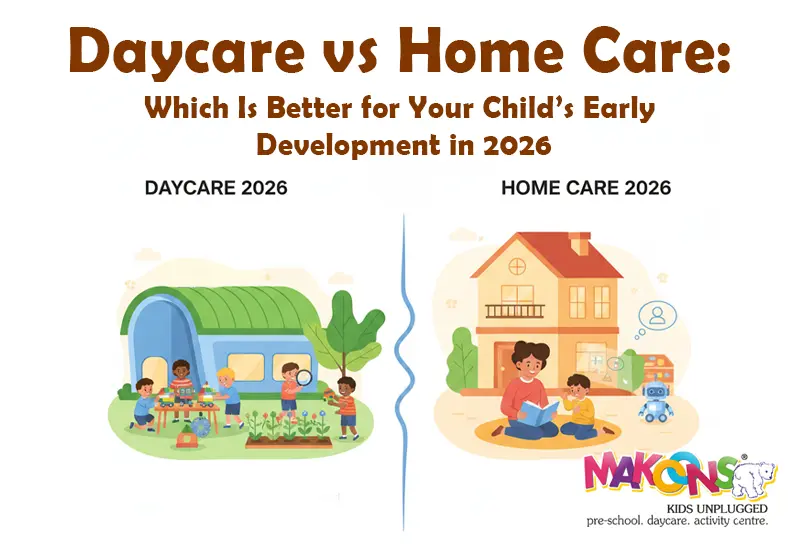
The decision on how your child will be raised during the early years is one of the most intimate parenting decisions that one will ever make. Parents nowadays have had more choices of childcare than ever before so the question remains the same daycare vs home care-which is better in terms of early child development of your child?
It does not have a universal solution. Both the options assist the early childhood development in various manners based on the personality of the child, family routine, and learning needs. This blog provides an open and fair comparison in order to enable parents to make an informed choice.
Conceptualizing Early Childhood Development In 2026
The early life between five and ten years is very important in brain development, emotional security, and social skills. It is also at this time that children develop habits, gain confidence, and understand the way to relate with the world.
It does not matter whether a child stays at home or in a daycare, the most important thing is considered to be the child’s learning environment; whether it is safe, responsive, and stimulating.
What Is Home Care?
A child is normally taken care of by:
- Parents
- Grandparents
- A nanny or babysitter
Such an arrangement is typical in households where the parents are either working at home or having flexible work schedules.
Benefits Of Home Care
- Strong emotional bonding
- Familiar environment
- Flexible routines
- Personalized attention
Home care is usually effective in case of infants and toddlers who require coziness and consistency.
What Is Daycare?
Daycare is an organized environment in which trained care providers are in charge of children in groups. In 2026, modern daycare centers are concerned with care, safety and learning jointly.
Benefits Of Daycare
- Interpersonal communication with peers.
- Barred exposure to routine and structure.
- Early learning activities
- Preparation in preschool care.
Quality daycare programs are also meant to facilitate early childhood development and not supervision.
Childcare Vs Home Care: Social Development
A significant proportion of toddler growth comparison is in social skills.
Home Care
Home-cared children are exposed to adults to a large extent. Although this helps in language development, there can be a limitation in peer interaction.
Daycare
Daycare encourages:
- Sharing and cooperation
- Conflict resolution
- Teamwork
- Friendship building
Daycare can also enhance early social confidence in children who like working in groups.
Educational Opportunities In Each Environment
Learning In Home Care
The use of home care facilitates learning by:
- Daily conversations
- Household activities
- Storytime and play
The informal and flexible learning is usually influenced by the involvement of the caregiver.
Learning In Daycare
Daycare provides systematic learning like:
- Songs and rhymes
- Sensory play
- Storytelling sessions
- Group activities
Such a methodical intervention will assist the child in adaptations to preschool care in the future.
Routine and Discipline
Home Care
Domestic practices are necessarily loose. This, although comfortable, is not so much as to build up a habit.
Daycare
Daycare introduces:
- Fixed meal times
- Activity schedules
- Rest periods
The routines also make children disciplined and conscious of time which are valuable skills in life.
Emotional Attachment And Security
Home Care
There is usually a high emotional connection with care homes, particularly during childhood. Children are comfortable in an environment they know, and have people they know.
Daycare
Quality daycare creates emotional security by:
- Consistent caregivers
- Responsive care
- Encouraging independence
Children also get to learn to feel secure even when they are not at home.
Toddler Development Comparison: Independence
The independence in each of these settings is formed in different ways.
- Home care promotes emotional reliance and comfort.
- Some of the self-help skills promoted in daycare include eating, cleaning, and making decisions.
Each of the two approaches works towards a balanced development that is managed wisely.
The Child Learning Environment Is More Important Than The Whereabouts
At home or daycare the child learning environment should be:
- Safe and clean
- Emotionally supportive
- Provoking and yet not excessive.
The nurturing home atmosphere may prove to be as efficient as the quality daycare.
Preschool Care Readiness
Those children that are moving to preschool can easily do so in case they have been exposed to group care.
- Daycare is an automatic way of training children to preschool activities.
- Home care children might require additional adjustment time.
Nevertheless, this can be overcome through supportive parenting.
Parental Involvement And Level Of Stress
Home Care
Parents can easily be involved more, but may be burnout at the same time, particularly when in striking balance working.
Daycare
Daycare allows parents to:
- Focus on work
- Maintain balance
- Reduce stress
An authoritative parent is positively related to the emotional wellbeing of a child.
Considerations Of Health And Safety
Home Care
- Reduced exposure to infections.
- One-on-one supervision
Daycare
- Strict hygiene protocols
- Health monitoring systems
Daycare illnesses are common but they tend to develop immunity with time.
Cost And Accessibility
- Home care can include the purchase of a nanny or decrease in income.
- Daycare has standard prices and programmed services.
Budget usually forms a major part of parenting decisions.
Which Option Is Better In 2026?
The argument of daycare vs home care has no standard answer. The best choice depends on:
- Child’s temperament
- Family routine
- Quality of care available
- Parental comfort
When carefully considered, both of the options can be used to promote healthy early childhood development.
Hybrid Approach: An Emerging Leader
In 2026, a good number of families resort to a combination of the two:
- Home care in early years
- Part-time daycare later
This is a moderate way of integrating emotional safety as well as social learning.
Conclusion
The decision to put your child in daycare or at home is not really about right or wrong, but what will suit your child and your family. Both the childcare choices have distinctive advantages to the development of the toddler in terms of development and learning and emotional growth.
The love, attention and consistency that the child receives is what is really important. Children flourish when the parents put effort on the provision of a supportive child learning environment, who may be at home or in daycare.







 Twitter