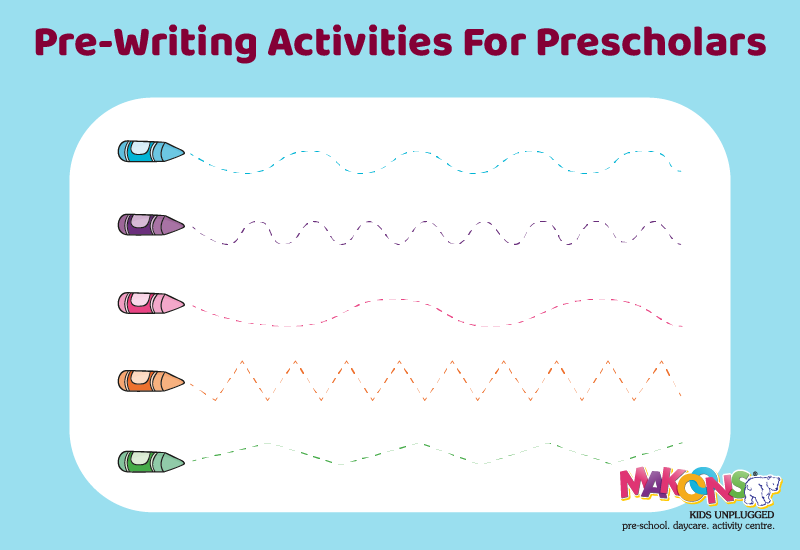
Teaching your kids how to write may seem difficult in an increasingly modern and digital world. It is way more than just putting pen to paper for small kids. It’s about developing and enhancing motor coordination and creating the base for effective communication. Pre-writing activities for preschool help young kids to develop fine motor control and coordination and a sense of direction before they start writing alphabets.
These early steps are important for handwriting readiness and the foundation of future writing success. Let’s examine the top pre-writing exercises that will not only keep your toddler interested but also support the structured and enjoyable development of early writing abilities in children.
Why Pre-Writing Matters?
Why preschoolers need to practise writing before they even know the alphabet may be a mystery to you. The development of fine motor skills holds the key. Before starting school, kids must be able to hold a pencil , move their finger precisely before forming a letter and know how to control their emotions. These fundamental abilities take time to develop.
The main goal of preschool pre-writing is not to start writing words or sentences, it is to get kids’ hands and minds ready for writing. These Pre-writing exercises help children learn and develop their muscles, enhancing focus and also in pattern recognition. These are all critical and important abilities for formal writing.
Main Areas to Focus On
When you think of pre-writing, think beyond paper. It includes:
- Fine Motor Development
- Visual Motor Integration
- Directional Awareness (left to right, top to bottom)
- Grip Strengthening
- Sensory Feedback
Before children can even begin confidently forming letters, all these areas must come together. What’s the best part? Play can accomplish all of this.
1. Tracing and Drawing for Toddlers
Before starting to learn letters, kids should learn to draw different shapes, lines, and random letters. Toddlers benefit from practicing controlled hand movements through tracing and drawing, which also gets them ready for the shapes found in letters.
Try this:
- Allow them to trace basic lines (straight, zig-zag, curved , circles).
- Offer them dotted lines to follow and trace.
- Use sand for finger tracing to learn shapes.
- Encourage them to draw circles, squares, and other basic shapes.
Also to improve the coordination of hand-eye, these basic exercises prepare students for actual formation of letters.
2. Playdough Fun for Fine Motor Skills Development
Playdough is considered one of the best activities for developing and also enhancing fine motor skills. Playdough’s resistance and stretchy behaviour helps kids to build motor hand muscles movements that are essential for writing.
Ideas:
- Roll playdough into snakes and form letters.
- Flatten dough and use stamps or blunt tools to “write.”
- Use cookie cutters for shape learning while exercising those little fingers.
Activities which involve playdough are captivating, and perfect for developing pencil movement and finger strength.
3. Lacing and Beading Activities
Activities that promote pencil grip development include lacing through cards or threading beads onto a string. These activities, which simulate the motion required to hold a pencil, call for control and accuracy.
Benefits include:
- Improved hand dexterity
- Better concentration and patience
- Stronger finger muscles
As your child develops, progressively introduce smaller beads and strings, starting with larger ones.
4. Vertical Surface Writing
A distinct sensory and motor experience can be had by using vertical surfaces, such as easels or chalkboards. It aids in handwriting readiness and naturally promotes appropriate wrist and shoulder positioning.
Options include:
- Drawing on windows with window markers
- Using chalk on walls (with parental permission!)
- Painting on standing easels
Preschoolers can more easily control the larger, more dramatic movements that these activities allow.
5. Pencil Grip Development Activities
Writing smoothly requires mastering the proper pencil grip. Without the stress of actual writing, you can assist your child in becoming accustomed to handling writing instruments.
Fun tools:
- Use short crayons (they encourage a natural grip)
- Try “tripod grips” or grip aids
- Practice with tweezers and tongs
- Use mini clothespins for pinching games
Their hands get ready for longer writing sessions without strain thanks to these gentle exercises.
6. Dot-to-Dot Activities
Connecting the dots is more than just passing the time. They test the child’s capacity for movement planning, boundary-keeping, and line-tracing—all of which are essential for developing early writing abilities in children.
You can:
- Print themed dot-to-dot sheets (animals, vehicles)
- Draw mazes with crayons or chalk
- Create finger mazes in sand trays
They’re fun to do and also are great for improving focus and self-control.
7. Scissor Practice
Cutting with scissors actually strengthens the same muscles required for writing, despite the fact that it may not seem related. During scissor tasks, children also develop hand-eye coordination and directionality.
Start with:
- Cutting along straight lines
- Gradually move to curves and zig-zags
- Let them create art with the pieces they cut
Always use the type of scissors that are safe for kids, and keep a close eye on them. It’s imaginative and also fulfilling.
8. Sensory Writing Activities
Children who have sensory-rich experiences are better able to recall movements and shapes. Additionally, sensory writing stimulates a variety of senses, which improves learning outcomes.
Ideas include:
- Writing in shaving cream spread on a table
- Drawing letters with fingers in a tray of rice
- Using a paintbrush dipped in water on concrete
These activities stimulate memory and build muscle movement awareness.
9. Nature-Inspired Writing
Take your education outside. Tracing leaves, writing with sticks in the ground, or replicating natural patterns all foster creativity and introduce an element of discovery.
Some ideas:
- Use a twig to write in mud
- Collect small stones to form letters
- Draw in sand with fingers or tools
Nature offers endless opportunities for pre-writing without needing any paper.
10. Action Songs and Finger Rhymes
Never undervalue the impact of tunes like “Twinkle Twinkle” or “Itsy Bitsy Spider.” The finger movements used in these rhymes enhance rhythm and dexterity, two skills that are beneficial when writing.
Benefits include:
- Bilateral control and coordination (using both hands together)
- Improved rhythm and pace
- Finger muscle exercise
They’re simple, effective, and loved by children worldwide.
Final Thoughts
You don’t have to start writing letters right away if you want to get better at writing. It’s about getting creative, feeling better about yourself, and making your fingers stronger. With these activities, preschoolers’ hands and brains are better ready for the next step in the writing process. Most importantly, make it fun, interesting, and interactive. Being able to write is more than just a skill. This is just the beginning for your child on this journey.
Let that first scribble lead the way.
Read Also : The Importance of Mindfulness Activities in Preschool Curriculum







 Twitter