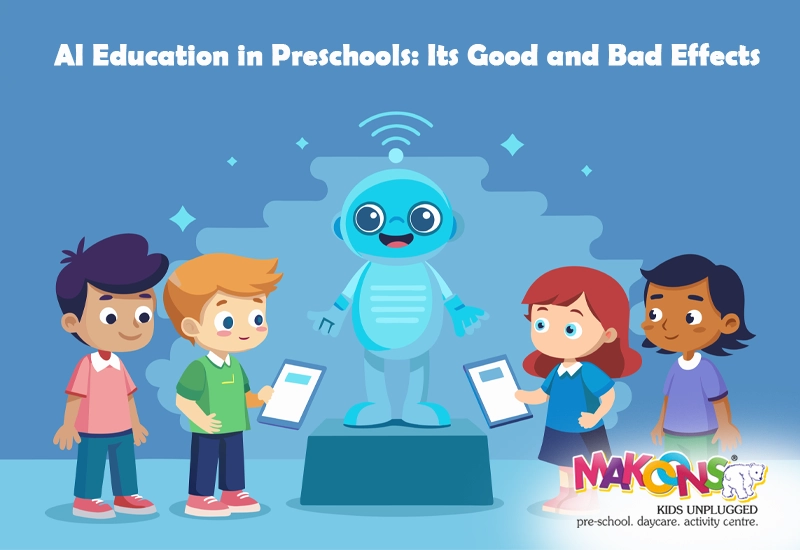
AI is now being used in many schools. It is also slowly entering preschools. Many parents and teachers are talking about ai in preschool education. Some people think it is helpful. Others think it may not be good for small children.
The age range of preschool children extends from three to five years. The developmental stage of preschool children enables them to learn basic skills. The children develop their ability to speak through this process. The children learn about letters, numbers, colors, and shapes. The children develop their social skills through learning to share, listen and play with others. The implementation of technology in early childhood education demands our complete attention.
This article explains the good and bad sides of artificial intelligence in education in simple words.
What Is AI in Preschool?
AI means smart computer programs that can learn and respond. In schools, artificial intelligence in education includes smart apps, games, robots, and voice tools.
In preschools, AI learning tools for kids may include:
- Apps that teach ABC and numbers
- Games that change levels based on the child’s answers
- Voice tools that help children speak better
- Story apps that ask questions
These are part of digital learning for preschoolers. Children use them on tablets or computers.
Good Effects of AI in Preschool Education
There are some benefits of AI in preschool education when it is used properly.
1. Learning at Own Speed
Every child learns differently. Some children learn fast. Some need more time. AI tools can understand this.
If a child finds counting hard, the app gives more practice. If the child is doing well, it moves to the next level. This helps children learn at their own speed. This is one big benefit of artificial intelligence in education.
2. Makes Learning Fun
Preschool is necessary for teaching children social interaction skills. Children learn how to talk to their friends. The children practice sharing toys while learning to wait for their turn.
When children spend excessive time with AI devices, their ability to communicate with actual people decreases.
Artificial intelligence in education cannot show real emotions. The technology fails to create human connections.
3. Basic Technology Skills
Today, technology exists in every part of our world. Children will grow up using computers and phones.
Early childhood education benefits from basic AI tools, which help children learn fundamental technological skills. Children practice tapping and dragging while they complete basic tasks.
This can help them feel comfortable with technology later.
4. Helps Teachers
AI does not replace teachers. It only helps them.
Artificial intelligence in education can show teachers how each child is doing. It can give simple reports. Teachers can see which child needs extra help.
This saves time and helps teachers plan better.
5. Helps in Language Learning
Some AI apps listen to children when they speak. They correct pronunciation. They read stories aloud.
This helps improve speaking and listening skills. AI learning tools for kids can simply support language learning.
Bad Effects of AI in Preschool Education
There are also problems with AI in preschool education.
Preschool children need human love and care. Too much technology can create problems.
1. Too Much Screen Time
Young children should not sit in front of screens for many hours. Too much screen time can harm both their eyes and their ability to sleep.
Preschoolers should have restricted access to digital learning materials. Children also need to run, jump, and play outside.
Early childhood education should use technology as a tool but not let it substitute physical activity.
2. Less Social Interaction
Preschool is important for social skills. Children learn how to talk to friends. They learn how to share toys and wait for their turn.
If children spend too much time with AI devices, they may talk less to real people.
Artificial intelligence in education cannot show real emotions. It cannot replace human connection.
3. Dependence on Devices
AI apps give quick answers and rewards. But real life is different. Sometimes children need to wait and think.
If children depend too much on ai learning tools for kids, they may expect quick results all the time.
This is one of the main cons of ai in education.
4. Privacy Issues
Many AI apps collect data about children’s learning. Parents may worry about where this data goes.
Schools must choose safe and trusted platforms for ai in preschool education.
Protecting children’s information is very important.
5. Less Creative Play
Children learn best through free play. They build blocks. They draw pictures. They play pretend games.
If digital learning for preschoolers replaces free play, creativity may reduce.
Technology in early childhood should not replace hands-on activities.
Balance Is Important
The pros and cons of ai in education show that AI is neither fully good nor fully bad.
AI can help children learn better. But it must be used in a limited way.
Here are some simple rules:
- Use AI for a short time only
- Do not replace teachers with technology
- Mix digital learning with outdoor play
- Encourage group activities
- Check what apps children are using
Artificial intelligence in education should support learning, not control it.
Role of Parents and Teachers
People who raise children and people who teach children need to direct their guidance toward their students.
Adults need to select high-quality AI educational tools which will benefit their children. The educational apps should not contain excessive advertisements or other elements which will interrupt learning.
Teachers should continue to teach their students through storytelling and singing and drawing and physical activities.
Early childhood education should use technology as one component of its educational program.
Conclusion
AI is becoming part of education. It is now entering preschools. Ai in preschool education has some good effects. It helps children learn at their own speed. It makes learning fun. It supports teachers.
Artificial intelligence in education is only a tool. It cannot replace teachers or parents. Preschool children need love, care, and real human interaction. The situation has positive aspects, but the negative impacts create serious problems. The excessive screen time, together with reduced social contact and the resulting privacy violations and diminished opportunities for creative play, serves as a major problem.
The educational system needs to understand both the positive and negative effects that artificial intelligence brings to its operation. Digital learning for preschoolers should be limited and balanced.






 Twitter