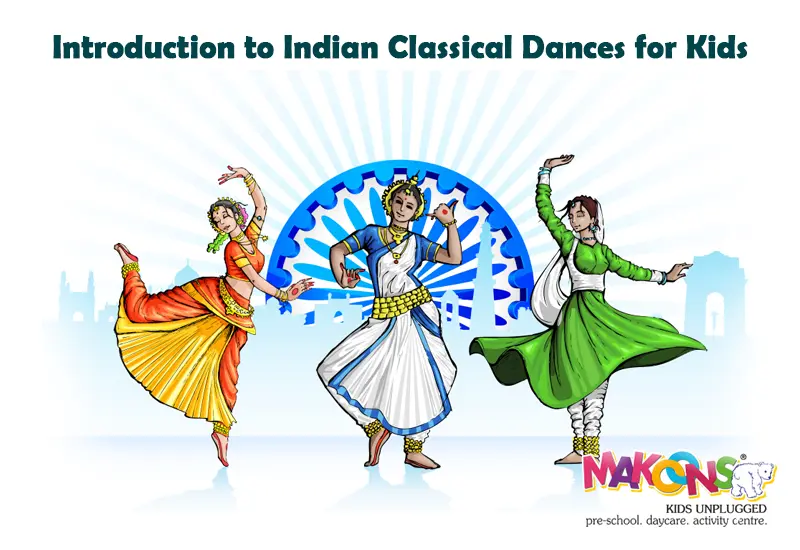
India is a diverse cultural, traditionally colored and rich land. Dance occupies a very special place among these treasures. Indian classical dance among children is not mere movement and music- it is a lovely method of linking kids with the past, narration, discipline and creativity. These dances were transmitted down the ages and we can see young learners can still be inspired by these dances.
Exposing the children to the traditional dances of India makes them know their culture and at the same time gain confidence, fitness and arts knowledge. In this guide, we shall discuss Indian classical dance in a simple light and entertaining manner that is easily understandable by kids.
What Is Indian Classical Dance?
Indian classical dance is an ancient type of dance, which is dictated by certain rules, expressions, and style of telling a story. Different styles of dancing are characterized by their own costumes, music, gestures and movements. The dances usually narrate mythological, natural and everyday stories.
To the children, learning these forms of dances is as new as learning a new language except that the new language uses body, face, and rhythm to convey a feeling.
Reasons Why Kids Should Study Classical Dance
Teaching Indian dance to kids has numerous advantages besides entertainment.
1. Builds Confidence
Acting before others will help the children to overcome shyness and make them feel more about themselves.
2. Improves Fitness
Dance increases the strength of muscles, increases the flexibility, and increases coordination.
3. Enhances Focus
The process of memorizing steps and rhythms makes the brain more focused.
4. Teaches Discipline
Patience and commitment are some of the qualities that are instilled in children with the help of regular practice.
5. Advocates Cultural Sensitivity
Dance is a significant part of cultural education among children and it makes them acquire knowledge about traditions and values.
Nature of the Plays in India
There are eight distinct classical Indian dances. All of them are located in various regions and are narrating different tales. We shall discuss some of the popular kid styles.
1. The Dance of Expressions: Bharatanatyam
One of the oldest classical Indian dances is Bharatanatyam among children. It was formed in Tamil Nadu and is characterized by elegant hand signals, powerful footwork and dramatic narration.
Key Features:
- Clear body posture
- Hand gestures called mudras
- To express feelings, facial expressions are used.
- Rhythmic foot movements
Children like Bharatanatyam since it seems like acting and dancing together. They are taught to move with their happiness and sadness and surprise among other feelings.
2. Kathak The Dance of Story-Telling
Basics of Kathak dance are based on narration of stories by using spins, footwork and rhythm. It is a dance of North India that is characterized by graceful motions.
What Kids Love About Kathak:
- Fast spins called chakkars
- Rhythmic foot tapping
- Beautiful costumes
- Musical storytelling
Kathak is said to be less difficult to learn as it has natural motions that children can learn at a very fast rate and enjoy.
Other famous popular Indian Classical Dance Forms
In addition to Bharatanatyam and Kathak, there are other numerous classical dances of India that children may learn:
1. Odissi
Reputed to have grace curves and sculpturesque poses.
2. Kuchipudi
Has got dramatic narration and motions.
3. Manipuri
Light, delicate nature- and mythological-inspired dancing.
4. Mohiniyattam
Floating motions to a majestic dance.
Both styles have their own learning experiences for children.
The Use of Classical Dance in child development
Indian classical dance among kids helps in physical and mental development.
Physical Benefits
- Enhances muscle tone and posture.
- Builds strength and stamina
- Enhances flexibility
Emotional Benefits
- Encourages creativity
- Helps express feelings
- Reduces stress
Social Benefits
- Builds teamwork skills
- Brings confidence on stage.
- Promotes cultural pride
Tips for Introducing Kids to Classical Dance
These points will help parents and teachers to make the learning of dances fun and easy:
1. Start Early
Even children at the age of 4-5 may start learning simple steps.
2. Choose the Right Style
You can choose a form of dancing depending on the interests and personality of the child.
3. Make Practice Fun
Practice with music, story-telling, and games.
4. Encourage Performances
Minor appearance performances increase confidence.
5. Appreciate Efforts
Compliment encourages children to be motivated.
The Use of Dance in the Cultural Education of the Schools
Due to the fact that dance facilitates cultural education of children, dance is incorporated in the curriculum of many schools. Dance programs can assist the students:
- Get to know about the diversity in India.
- Learn the traditional values.
- Festivals should be celebrated by performance.
- Nurture both academics and innovativeness.
Dance is not merely an activity, it is a learning tool that helps kids to relate to their heritage.
Fun Facts of Indian Classical Dance
Kids love fun facts! The following are some of them:
- Classical dances date back to several thousand years ago.
- Animals, objects and feelings can be defined by hand gestures.
- Facial expression involves the art of narration without uttering words by dancers.
- Rhythmic sounds are made using special ankle bells known as ghungroo.
Conclusion
A good approach to combining fun, fitness and learning is the introduction of Indian classical dance to kids. These dances are not merely performances but it is a way of life which imparts discipline, creativity and cultural pride.
Since Bharatanatyam among children is possible to learn and acquire the basis of a Kathak dance, each dance style has its own advantages and pleasant experiences. Children learn to be confident, respectful to tradition and have a lifetime passion for the art by having an experience of the classical dances of India.
Teaching children these gorgeous Indian dance styles would keep them active, creative and connected with their heritage and enjoy the magic of movement and music.
FAQs
Q1. Which is the ideal Indian classical dance to begin with among children?
Ans: Kathak and Bharatanatyam are good entry-level choices as they are structured in terms of learning and are also common to learn.
Q2. What is the age of children who can learn classical dance?
Ans: The majority of children are able to take their first steps in learning at the age of 4 to 6.
Q3. What is the contribution of classical dance to child development?
Ans: It enhances physical athletics, self-esteem, imagination, and emotionality.
Q4. Is classical dance not challenging to children?
Ans: Not at all. When taught well and through entertaining ways, children will learn without any trouble.
Q5. What is the significance of classical dance in cultural education to children?
Ans: It makes children learn about traditions, values, and a rich Indian heritage in an interactive manner.







 Twitter