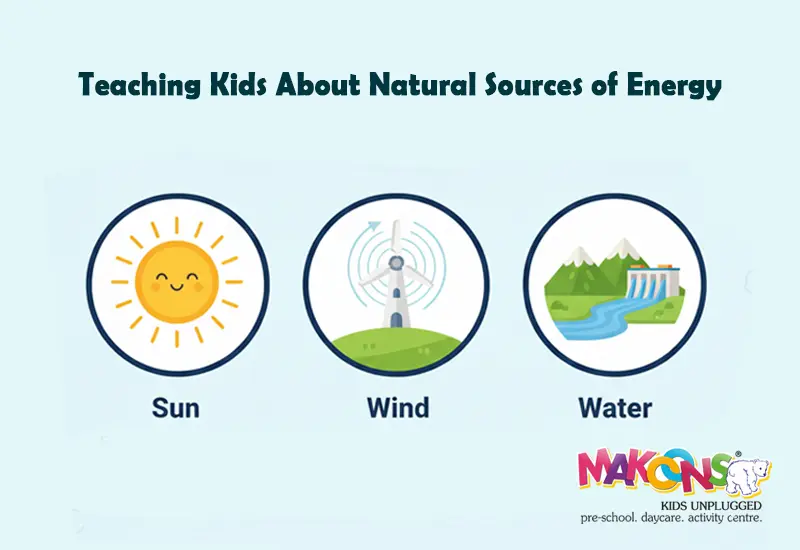
Energy is all around us. We use it to switch on lights, cook, drive cars, and use electronic appliances and devices. However, where is this energy found? Explaining to children the ways to get natural sources of energy in the case of kids is a significant move towards developing the consciousness of the environment and sustainability.
Lessons on renewable energy among children when presented in simple and interesting forms can ignite curiosity and responsibility among children at a tender age. Knowledge of energy is not merely a branch of science, it is also a major factor in environmental education of children.
The Reason Kids Should Be Taught About Natural Energy
Educating children on energy early in life facilitates:
- Learning about the functioning of the world in a better manner.
- Consciousness to the environment.
- Interest in science subjects.
- Eco friendly consumption of energy and material.
- Good backgrounds in learning science among children.
Children are likely to conserve and appreciate energy when they learn the source of energy.
What Are The Natural Sources Of Energy?
Natural sources of energy are energy sources that are found in nature and could be utilized to generate electricity or power. Most of them can be easily renewed, which implies that they are not easily exhausted.
The key sources of energy that the kids can learn about are:
- Solar energy
- Wind energy
- Water energy
- Biomass energy
- Geothermal energy
We may discuss these in an easy and child accessible manner.
1. Solar Energy
The sun is the source of solar energy. We receive light and heat on a daily basis through the sun.
How It Works:
- Solar panels receive the sun rays.
- The sunlight is translated into electricity.
- Homes and buildings are run by electricity.
Why It’s Important:
- Billions of years the sun will shine.
- It does not pollute the air.
- It is among the cleanest natural sources of power which kids should learn about.
Solar wind water energy can be taught by starting with solar energy since children can witness and touch the sun.
2. Wind Energy
The wind energy is produced when the moving air rotates wind turbines which are of a large size.
How It Works:
- Wind blows.
- The turbine blades spin.
- Electricity is generated through spinning.
Why It’s Important:
- Wind is free and natural.
- It does not emit gases that are harmful.
- It promotes renewable energy that is clean and child education.
An easy exercise: allow children to blow on a pinwheel to learn how air moves.
3. Water Energy (Hydropower)
Floating water in the waterways or dams provides water energy.
How It Works:
- Moving water spins turbines.
- The turbines are used to produce power.
Why It’s Important:
- The cycle of water occurs naturally via rain and rivers.
- It is a satisfactory energy source.
- It demonstrates the ways in which solar wind water energy systems are in touch with nature.
The explanation of hydropower assists in reinforcing the learning of science among kids as it is linked to the water cycle.
4. Biomass Energy
Plants and organic substances form biomass energy.
Examples:
- Wood
- Crop waste
- Animal waste
Why It’s Important:
- Plants can be used again and they regenerate.
- It reduces waste.
- It belongs to the lessons on sustainable energy resources in kids.
Even biomass instruction relates children to the concepts of agriculture and recycling.
5. Geothermal Energy
The Earth has heat that produces geothermal power.
How It Works:
- To generate steam, heat contained deep underground is utilized.
- Steam rotates turbines to generate electricity.
Why It’s Important:
- It is available year-round.
- It generates minimal pollution.
- It helps in learning on the Earth science in science education amongst children.
Also Know: Top 20 Common Words with Silent Letters in English
Renewable And Non-Renewable Energy
A crucial aspect of environmental education to children is the explanation of the difference between renewable energy and non-renewable energy.
Renewable Energy:
- Comes from natural sources
- Does not run out quickly
- Solar, wind and water are included.
Non-Renewable Energy:
- Comes from fossil fuels
- Can run out
- Consists of coal, oil and natural gas.
This comparison is important to teach children the advantages of choosing renewable options because they are better in terms of the planet.
Amusing Ideas To Teach Children About Natural Energy
Learning that happens to be interactive is powerful. Here are engaging ideas:
Simple Science Experiments
- Use a small solar-powered toy.
- Create a mini water wheel.
- Experiment with an experiment on paper fan wind power.
Art And Craft Activities
- Draught solar panels and windmills.
- Construct models out of recycled materials.
Outdoor Exploration
- Feel the warmth of sunlight.
- Observe windy days.
- Visit a dam, or solar farm, where possible.
These activities simplify natural sources of energy among the kids.
Energy Conservation And The Energy Sources
It is not fully possible to understand energy without knowing how to save it.
Teach children to:
- Switch off the lights when they are not in use.
- Unplug chargers.
- Use water carefully.
- Open windows rather than use fans as much as possible.
These mini habits create responsible practices and enhance environmental education to children.
Also Know: Renewable vs Non-Renewable Resources: A Simple Guide for Kids
Advantages Of Education In Renewable Energy
The use of renewable energy among children at an early age:
- Develops environmental responsibility.
- Promotes the interest in science.
- Inspires future innovators
- Learn problem solving skills.
- Encourages sustainability of thoughts.
Knowledgeable children will be better adults making wiser decisions about the world.
The Connection Of Natural Energy Into Everyday Life
Introduce children to the effect of energy on their daily activities:
- The sun dries clothes.
- Wind moves kites.
- Water flows from taps.
- Electricity lights up rooms.
Real life connections also enhance science education among children and make learning relevant.
Simple Weekly Teaching Plan
As a parent or teacher, the following 5-day plan might work:
Day 1: Introduction to energy
Day 2: Solar energy activities
Day 3: Wind and water experimentations.
Day 4: Biomass and geothermal fundamentals.
Day 5: Playing games of energy conservation.
Reiteration and discussion are useful in remembering important concepts by the children.
Final Thoughts
Educating children on the use of natural sources of energy to power kids is not just a way of learning science, but an investment. By defining solar wind water energy using simple words, you make the children learn how our world works by nature.
Renewable energy among children can be discussed and made an exciting topic with fun experiments, discussions, and real-life examples instead of a complicated topic. These lessons promote responsibility and sustainability when they are coupled with effective environmental education on children.
Energy is everywhere, in sunlight, wind, water, and even in the interior of the earth. Early curiosity and awareness will result in an environmentally aware generation that appreciates clean energy.
And there is the real strength of education.







 Twitter