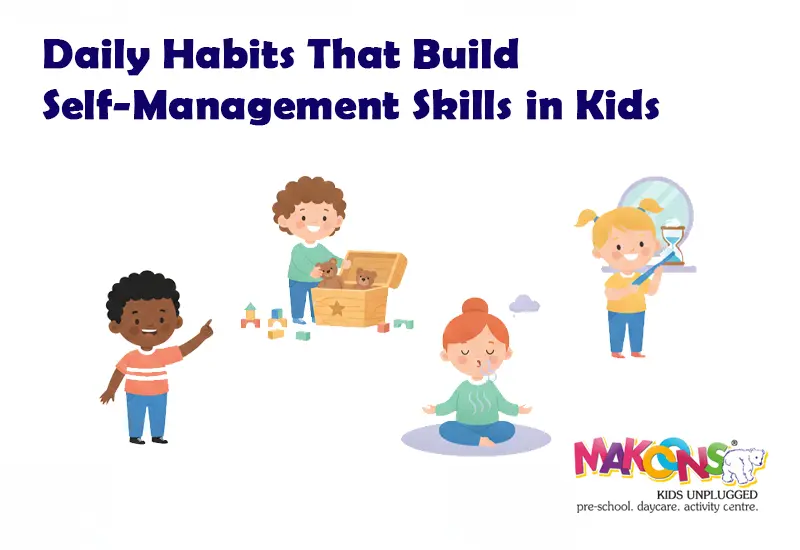
Children need to learn self-management as an essential life skill. Self-management enables children to comprehend their emotions while controlling their behaviors to select better alternatives. The development of these skills requires time because they develop through consistent daily practice and established daily patterns. Parents and caregivers play a big role in this process. Children develop self-management skills through their daily activities because these activities create particular behaviors. School and life success depends on these habits which enable children to develop their behavior skills.
This blog explains simple daily habits that build self-management skills in kids. Parents and preschool teachers can easily implement these habits which prove effective in both home and preschool environments.
Why Self-Management Skills Matter?
Self-management skills help children manage their emotions while they control their behavior and their time. The skills require children to wait with patience while they follow instructions and handle their frustration and complete their tasks.
Children with strong self-management skills find it easier to learn. They adjust better in social settings. They feel more confident and independent.
Preschool life skills such as sharing, listening, and taking turns depend on self-management.
These skills form the base for future success.
The best way to build these skills is through daily routines and repeated practice.
1. Start the Day With a Simple Routine
Morning routines stand out as the best daily practice which children should follow. Children experience stability through fixed routines which provide them control over their day.
Wake up at the same time each day.
Brush teeth.
Get dressed.
Eat breakfast.
When children know what comes next, they feel calmer. They learn to manage time and tasks.
Let your child do small tasks on their own. This builds responsibility and confidence.
Consistent parenting routines help children stay organized and focused.
2. Encourage Making Simple Choices
Giving choices helps children feel empowered. It also teaches decision-making.
Offer simple options.
“Do you want the red shirt or the blue one?”
“Do you want to read a book or draw first?”
This habit builds self management activities for children without pressure. It helps them think before acting.
Avoid giving too many choices. Two options are enough for young kids. Making choices daily improves control and accountability.
3. Teach Children to Clean Up After Activities
Cleaning up is a powerful habit. It teaches responsibility and task completion.
After playtime, ask your child to put toys back.
After eating, encourage them to clear their plate.
Make it part of the routine. Do it every day.
This habit supports child behavior development by teaching order and discipline. Praise effort, not perfection. The goal is learning, not speed.
4. Set Regular Meal and Snack Times
When kids have their meals at proper hour, it will help them have better control of hunger and consequently of their emotions. When people skip their meals they experience mood swings which result in negative behavior. The schedule requires you to establish specific times for your meals and snacks throughout the day.
The practice of eating snacks throughout the day should be avoided. Children develop the ability to wait for things and control their impulses through this practice. Meal schedules enable preschoolers to learn table manners and proper dining behavior.
Family members who eat together create emotional bonds that help them communicate better with each other.
5. Practice Waiting and Taking Turns
Waiting is a key self-management skill. It does not come naturally to children. It must be practiced daily.
Use everyday moments.
Wait for your turn to speak.
Wait while someone else finishes.
Play games that involve turn-taking.
Board games.
Simple card games.
These are effective self-management activities for children. Praise your child when they wait calmly. This encourages positive behavior.
6. Teach Emotional Naming and Expression
Children need words to express feelings. Without words, emotions often come out as tantrums or anger. Teach simple emotion words.
Happy.
Sad.
Angry.
Tired.
Ask questions like, “How do you feel?”
Help them name their emotions. This daily habit supports emotional control and child behavior development. When children understand feelings, they manage reactions better.
7. Set Clear and Consistent Rules
Clear rules make children feel safe. They also reduce confusion and misbehavior. Use simple language.
“Clean up after playing.”
“Use kind words.”
Be consistent with rules every day.
Consistency is one of the most important parenting routines. It helps children understand expectations. Avoid changing rules often. Predictability builds trust and self-discipline.
8. Encourage Independent Play Time
Independent play teaches focus and self-control. It allows children to manage time on their own.
Start with short periods.
10 to 15 minutes is enough.
Let your child choose the activity.
Drawing.
Building blocks.
Puzzles.
Do not interrupt unless needed. This habit strengthens attention span and problem-solving. It also builds confidence. Independent play is an important part of preschool life skills.
9. Use Visual Schedules
Visual schedules help children understand routines. Pictures are easier to follow than instructions.
Create a simple chart.
Morning routine.
Study time.
Play time.
Sleep time.
Review it daily. Visual schedules support daily habits for kids and reduce resistance to tasks. They help children manage transitions smoothly.
10. Teach Time Awareness Slowly
Young children do not understand time well. They need guidance.
Use phrases like:
“Five more minutes.”
“After this, we will clean up.”
Use timers if needed.
This habit helps children prepare mentally for change. It reduces frustration and tantrums. Time awareness is an important self-management skill that grows with practice.
11. Practice Good Sleep Routines
Sleep patterns impact human behavior, while sleep patterns also determine emotional responses. People who experience insufficient sleep will show increased irritability, together with decreased ability to concentrate.
Set a fixed bedtime.
Follow the same routine daily.
Brush teeth.
Change clothes.
Read a story.
Avoid screens before sleep.
Good sleep routines are essential parenting routines that support self-control and learning.
12. Model Good Habits Yourself
Children learn by watching adults. Your actions matter more than words.
Stay calm during stress.
Follow routines.
Manage emotions openly.
When children see good habits for kids practiced by adults, they copy them naturally.
Modeling behavior is one of the strongest tools in child behavior development.
13. Praise Effort, Not Just Results
Praise helps build motivation. But the type of praise matters.
Say things like:
“You tried hard.”
“You waited patiently.”
Avoid only praising outcomes.
This teaches children to value effort and self-control.
Positive reinforcement strengthens self management activities for children.
14. Keep Instructions Simple
Long instructions confuse young children. Confusion leads to frustration.
Use short sentences.
One task at a time.
For example:
“Put your shoes away.”
Then:
“Wash your hands.”
Simple instructions help children stay focused and organized.
15. Be Patient and Consistent
Self-management skills take time to develop. Progress may be slow.
Some days will be harder than others. This is normal.
Stay calm.
Stay consistent.
Daily habits work only when practiced regularly.
Patience is key in building strong preschool life skills.
Conclusion
The process of developing self-management skills occurs through the practice of daily activities. The process of building self-management skills requires people to perform tiny tasks on a constant basis. Daily habits for kids, such as routines, choices, and emotional awareness, create a strong foundation. These habits support child behavior development and independence. Parents do not need complex methods. Simple parenting routines practiced daily are enough. Your child will develop confidence and responsibility through your focus on good habits and age-appropriate self-management activities.







 Twitter