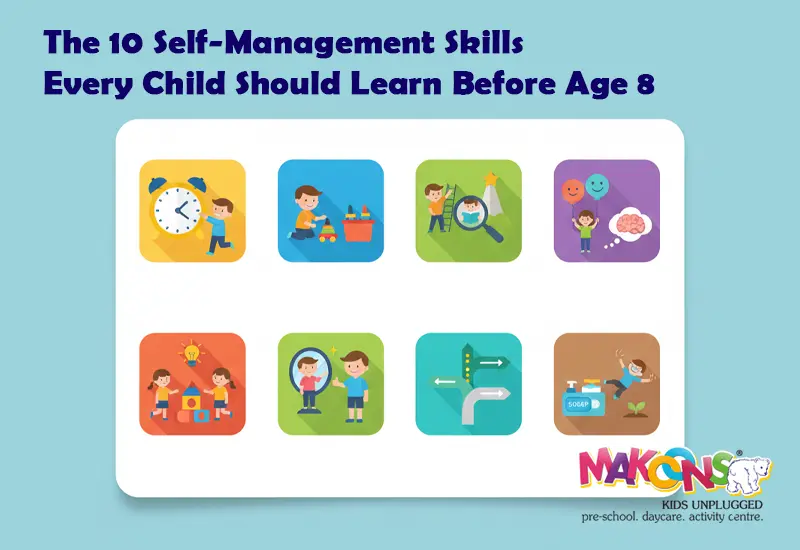
Kids are learning the life skills to get through the tough times from the very beginning of their lives. They become capable of feeling, controlling their actions, and doing minor chores by themselves, and the latter is referred to as self-management skills for children.
The first few years are crucial. The process of early childhood development is very quick in the period from birth to the age of eight. Children acquire character traits and other things that remain with them throughout their lives during these years.
Parents together with teachers can play the role of guides and show children the way to acquire these skills bit by bit. Let us take a closer look at the ten most basic self-management skills that every child needs to know by the age of eight.
Early Self-Management Skills That Shape Confident Kids
1. Knowing Their Feelings
Children go through a wide spectrum of emotions daily, including being happy, sad, angry, scared, or excited. The very first step is to make children widely aware of their feelings.
Teach kids to identify their emotions. For instance, “I feel angry” or “I feel happy.” This practice helps kids in their emotional control.
After a child has understood what it is that they feel, they change into becoming words, instead of crying or shouting.
2. Managing Emotions
Keeping emotions in check means keeping calm when his feelings are strong. Young children often get upset quickly.
Managing emotions means staying calm when feelings are strong. Young children often get upset quickly. This is normal.
Teach simple ways to calm down. Deep breathing helps. Counting slowly helps. Sitting quietly for a minute helps.
When you regularly practice these little things, it helps to develop emotional resilience among children. Emotional regulation increases in children little by little each time.
3. Following Simple Rules
Rules help children feel safe. They also teach right and wrong. Following rules is an important part of self discipline for kids.
Simple rules work best. Clean up toys after play. Wait for your turn. Listen when someone talks.
When parents follow the same rules every day, children learn faster.
4. Understanding Daily Routine
Children should know what happens during the day. Wake up time. Meal time. Play time. Bedtime.
This helps them understand time, even if they cannot read a clock. Routines make children feel secure.
Daily routines support self management skills for kids and make life more organized.
5. Doing Small Tasks Alone
There is no ultimate fact that a child should not be able to do, no need to grow on dogs of mature doings encroached upon their parents’ eternal freedom.
Doing tasks alone builds confidence. It also teaches responsibility.
Parents should allow children to try. Mistakes are okay. Learning takes time.
These are basic life skills for children.
6. Making Simple Choices
Children should learn how to choose. Small choices are enough. Choosing clothes. Choosing a fruit. Choosing a book.
Giving choices helps children feel important. It also helps them think before acting.
This skill supports early childhood development and builds confidence.
7. Paying Attention
To pay attention is a very vital ability. Kids have to concentrate for little time.
Drawing, doing puzzles, and listening to stories are some of the activities that train concentration.
Mastering attention skills allows kids to get more out of learning in both school and home.
8. Solving Small Problems
Problems happen every day. A toy breaks. Two children want the same toy. Something gets lost.
Do not fix the problem instead, assist them to come to a solution on their own. Put the question “What are our options now?”
Teaching kids to solve problems is a major life skill for them. It develops their minds and makes them less prone to panic.
9. Learning Patience
Children often want things immediately. Learning to wait is not easy, but it is important.
Games that involve turns help teach patience. Waiting for food or waiting in line also helps.
Self discipline for kids grows when patience is practiced every day.
10. Learning Responsibility
A sense of responsibility means peremptory doing.
Simple responsibilities are best. Putting books back. Helping clean up. Feeding a pet.
Praise children when they try. This motivates them. Responsibility helps build strong self-management skills.
Why These Skills Are Important?
Self-management skills help children in many ways. They help children behave better. They help children learn better. They help children feel confident.
Children who can manage emotions handle stress better. They talk about problems instead of reacting badly.
These skills are very important for school life and social life.
Early childhood development is the base for future success.
Parenting Tips for Young Children
Parents play the biggest role in teaching these skills.
- Stay calm when your child is upset.
- Use simple words.
- Be patient.
- Follow routines.
- Praise effort, not just results.
These parenting tips for young children help build trust and confidence.
Children learn by watching adults. Be a good example.
Conclusion
Self-management skills take time to develop. Children learn slowly, step by step.
Teaching self management skills for kids before age 8 helps them grow into confident and responsible people. The home is where children’s life skills training takes place. Kids can acquire skills that benefit them for a lifetime if they are given love, patience, and support.
Childhood development is a unique period. Take advantage of this phase to instill good practices and develop cheerful minds.







 Twitter