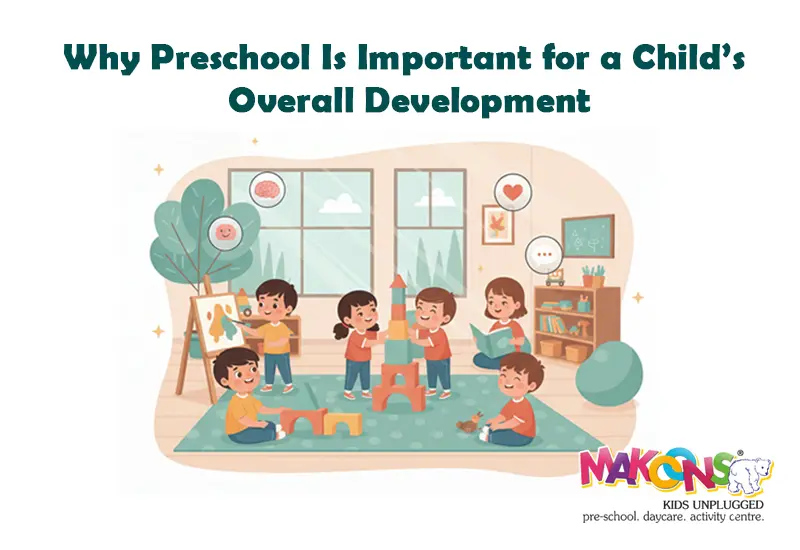
Preschool is a gate through which a kid enters outside-home learning. It is no longer a place to kill time. It is vital for a child’s development. Learning preschool’s importance assists parents in realizing how much these early years count.
Early childhood education teaches children basic skills at the right age. A child’s brain grows very fast between the ages of two and five years. What kids acquire during this period will stay with them for life. Preschool offers a solid early learning basis and gets children ready for school as well as for life in general.
Builds a Strong Early Learning Foundation
The most effective learning period for children is at an early age. The method of teaching in preschool is both simple and enjoyable. Kids get to know the basics: letters, numbers, colors, shapes, and sounds. Through Playing, Singing, Reading, and doing activities, these things are learned.
This educational basis in the beginning of life permits children to realize what learning is all about. They start to self-regulate, comply with the teacher’s instructions, and carry out small tasks to completion. Also, they are exposed to grouping and short attention spans during lectures.
Supports Social and Cognitive Growth
One of the biggest child development benefits of preschool is social and cognitive growth. At home, children mostly stay with family members. In preschool, they meet other children of the same age.
Children learn how to share toys and take turns. They learn how to talk to others and express their feelings. Small disagreements teach them how to solve problems.
Cognitive growth happens when children think and explore. Simple games, puzzles, and stories help them use their minds. Children start asking questions and learning new ideas. This helps improve memory and thinking skills.
Emotional Development
Preschool is a great place for kids where they learn to identify and comprehend their emotions. The tiny tots gradually grow from dependence on the mother to total separation at the daycare and become aware that it is very normal to feel timid, happy, or even angry.
Teachers attend to the kids when they are confused or in low spirits. Kids grow more confident day by day. They learn to do things because of curiosity, rather than fear.
Moreover, the children become more polite as well. They eventually reach a level where they can even identify feelings such as compassion and empathy. All these very significant factors of childhood development are the benefits of preschool.
Improves Language and Communication Skills
Language acquisition is among the fundamental activities in the process of education provided for very young children. The kindergarten environment is the place where vocabulary grows for the little learners every day. Teachers interact with kids by the means of talking, storytelling, and singing.
Permitting the children to express their emotions without restrictions is a wise choice. The experience not only enhances the vocabulary of the pupils but also develops the abilities for creating sentences. The kids develop the skill of talking with lucidity and assurance.
The kids’ communication skills are a strong means to power their friendship making. Besides, they will also be a plus factor in the kids’ acquiring of reading and writing skills in the following years.
Supports Physical Development
Preschools positively affect children’s activity levels. Activities such as running, jumping, and dancing teach the kids to develop their overall motor skills and also help them a lot in their cardiovascular fitness. Thus, these actions are necessary for the development of children’s gross motor skills.
Fine motor skills play a significant role, too. Drawing, coloring, and holding tiny objects are good ways to get the hand muscles ready for writing. These skills will be useful later for children’s learning of writing.
Physical growth that is healthy facilitates better concentration and thus learning.
Teaches Routine and Discipline
Preschool follows a daily routine. There is time for learning, play, snacks, and rest. This structure helps children feel safe and calm.
Children learn to follow simple rules. They learn to wait, listen, and complete tasks. These habits improve preschool readiness.
Routine helps children manage time and behavior. It also reduces anxiety and confusion.
Encourages Curiosity and Creativity
Children are naturally curious. Preschool gives them space to explore and ask questions. Art, music, and pretend play support creativity.
There is no pressure to be perfect. Children are free to try new ideas. This builds confidence and imagination.
Creative activities support social and cognitive growth. Children learn to think in new ways.
Related Topic: The Transformative Impact of Makoons Preschools on Early Childhood Education in India
Prepares Children for School
One of the primary objectives of early childhood education is preschool readiness. Children find out about the classroom’s functioning. Thus, they get to know the teachers, other children, and even the different ways of learning.
They learn how to follow instructions and work in groups. This makes the move to school easier.
Children also gain basic academic skills. More importantly, they develop confidence and independence.
Supports Parents
Preschool also helps parents. Teachers share updates about a child’s learning and behavior. Parents get guidance on child development.
Parents feel relaxed knowing their child is in a safe place. Working together helps support the child better.
Long-Term Child Development Benefits
Attending preschool is linked with later schooling successes in children. They are more focused, have better social interactions and problem-solving skills.
Early care and education are the great equalizers and strong foundation for all children. It prevents learning gaps and develops good habits.
Preschool importance goes beyond books and lessons. It shapes confidence, behavior, and love for learning.
Related Topic: Top 10 Pre School in India for Your Child’s Early Education
Conclusion
Preschool is fundamentally important to a child’s total development. It is the strongest early learning foundation in the child’s life and a support to learning in various ways.
The child’s development consists of advantages like social and cognitive growth, better communication, emotional resilience, and preschool readiness. The children with these skills would not only be successful in school but also in life.
Selecting a preschool is a forward move. A good beginning in early childhood education leaves a long-lasting impact.






 Twitter