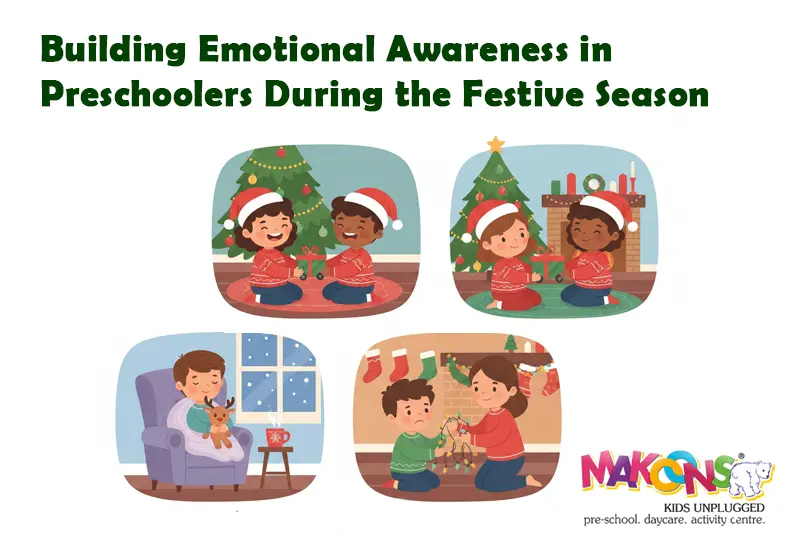
The festive period brings much excitement for households. Residences brim with illumination, adornments, presents, and social occasions. For kids, it seems like a magical realm. Alongside happiness, they might experience intense sentiments such as eagerness, vexation, or unease. This renders the holidays a suitable moment to emphasize emotional perception in young children. Guiding kids to identify and vocalize their sensations nurtures their emotional development during their formative years.
Recognizing emotions involves being able to perceive and comprehend one’s own feelings plus those of other people. Toddlers are still developing this capability. They feel things deeply but don’t always show their emotions in a suitable way. For example, a child might cry or have a tantrum if they can’t open a gift right away. These kinds of reactions are common for little ones.
Pediatricians and educators may help children in recognizing their feelings. The hearing of phrases as simple as you look happy or you seem to be angry helps kids to link words with emotions. For the emotional growth of the young children, this is a significant milestone.
The festive period often brings about numerous shifts in everyday routines and fresh social engagements. These sorts of situations can prove challenging for younger children.Such experiences might be hard to bear for the little ones. They could be very timid, frightened or envious, for instance. But these very scenarios are perfect moments for introducing social emotional learning to the preschoolers.
Simple Activities to Build Emotional Awareness
Here are easy ways to support understanding emotions in young children during the festive season
1. Emotion Naming Games
Employ visuals, small statues, or toys to illustrate diverse feelings. Inquire with the youngsters regarding the figures’ sentiments, or encourage them to mimic looks of happiness, sadness, or surprise. This aids them in identifying emotions both internally and in surrounding individuals.
2. Storytelling
Share stories. Stop to question the feelings of the characters and whether the children have experienced similar feelings. Gratifying storytelling plays a significant role in helping kids comprehend feelings and connecting them with everyday life.
3. Emotion Check-ins
While engaged in activities, present uncomplicated queries such as are you thrilled or scared, or what is your current happiness source. Continuous monitoring instructs kids to recognize and communicate their emotions.
4. Art
Through crafts, kids can portray their feelings. Among activities as drawing faces, making greeting cards, or decorating masks stand the representations of various emotions. It is the expression of emotions that kids can do inarticulately with the help of art.
5. Role-Playing
Pretend play helps kids rehearse feelings. Set up situations like presenting gifts or throwing a mini party. By performing happiness, amazement, or dissatisfaction, the little ones learn about their own and other people’s emotions.
Holiday Moments
Everyday schedules offer chances to grow emotional insight.
Exchanging presents: Prompt youngsters to observe the emotions of others when a gift is presented.
Family events: Ready youngsters for unfamiliar people and happenings. Assist them in voicing sentiments such as reserve or enthusiasm.
Pausing and observing: Introduce basic techniques like tallying or slow breaths to handle restlessness.
Modeling Emotional Awareness
Children learn by watching adults. Share your feelings in simple words. Show them how to manage emotions calmly. Children who see adults handle feelings well are more likely to do the same.
Talking About Emotions After Events
After a holiday activity or gathering, ask children what made them happy or sad. Reflecting on their experiences helps children understand that all emotions are normal.
Encouraging Empathy
Vacations offer a fine chance to foster compassion. Youngsters might assist in crafting greetings, giving away playthings, or making goodies for others. Considering different perspectives enhances social abilities and emotional grasp.
Challenges
The festive period can be quite a lot for a young child to manage. Too many bright lights, crowds, or loud noises can lead to considerable strain. When their wants aren’t met, youngsters might experience real disappointment. Conflicts among siblings or companions could arise. Nonetheless, these moments offer excellent opportunities to show children how to divide things, exhibit tolerance, and find inventive solutions.
Tips for Parents
- Keep explanations short and simple
- Validate all emotions, do not say stop crying or be happy
- Ask what children can do to feel better
- Celebrate moments when children wait patiently or share
Benefits of Emotional Awareness
Focusing on emotional awareness during holidays helps children:
- Notice and express their emotions
- Develop empathy and kindness
- Learn self-control and problem-solving
- Gain confidence in social situations
These skills strengthen emotional intelligence in early childhood and support long-term growth.
Conclusion
Festivities involve more than just presents and bright lights. This time presents a great chance to help young children identify their emotions. Easy tasks, self-examination, and imitating usually allow the little ones to pinpoint, label, and control their emotions. The little ones also acquire compassion and interpersonal skills through the activity of the season. For parents and educators, it is just a matter of being a little proactive during the holidays to turn the period into a time of emotional learning. Toddlers will be developing emotional sensitivity during the holidays and transferring it later on out of the Christmas season.







 Twitter