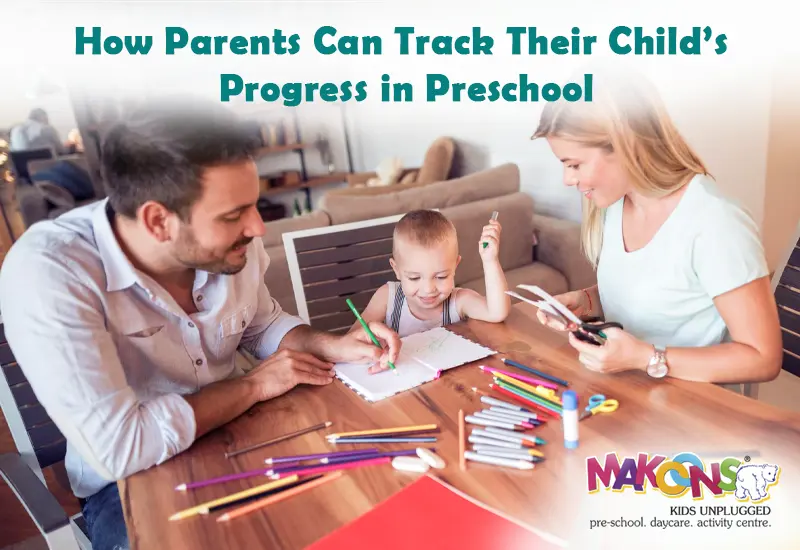
Preschool is a dynamic period of both children and parents. New skills are being learned on a weekly basis by children, these include how to talk better, share toys, routines, crayons and how to explore the world in a curious way. It is normal to be a parent and be concerned about how your child is growing at this initial stage and what you can do to help him/her. Monitoring the progress does not need to be stressful and too formal. Under the appropriate strategy, this becomes a gentle, continuous process that makes you follow up with the learning process of your child.
Being present is another way to establish a closer relationship with teachers and monitoring the child progress in the preschool is so much easier and has more sense. Children develop at a rapid pace at these stages, thus it may be beneficial to pay attention to minor details to be better able to locate their strengths, weaknesses, and the development of the children.
The Importance of Tracking Child Progress
Preschool is not just about letters and numbers, but it is about social, emotional, cognitive and physical development. Knowing the progress of your child can make you know:
- what are the skills they are confident in.
- where do we have to develop a bit.
- their interaction with other people.
- how prepared they are for kindergarten.
This will simplify the process of tracking child development a lot and provides the parents and teachers with a clear idea of what is going on every week.
How Parents Can Monitor the Progress of Their Child at Preschool?
The following are just some of the basic, real life ways in which parents can be kept informed and engaged and not make the process too formal and complex.
Keep in frequent contact with the teacher
The parent teacher communication preschool program involves good communication. A brief conversation in drop-off or pick-up can say a lot about how your child spent his day. Parents may pose simple questions such as:
- How were they going during group time today?
- Is this new activity being enjoyed by them?
- Should I know or help in anything little at home?
Parents follow up without causing any inconvenience by these informal conversations.
Know the style of assessment of the preschool
The way of checking progress varies in every preschool. Others utilize observation notes, others use little projects or portfolios. Learning the procedures of evaluation in the preschool of the school will assist you in knowing what to expect. It is not necessary to wait for the big meetings, teachers usually notice everyday behavior, communication, motor skills, and learning habits.
Make the most of report cards
Of late, many schools have simple and child friendly report cards, which they share every now and then, with parents. These reports tend to emphasise on social abilities, motor growth, communication, early learning ideas as well as behavior. In reading report cards in preschool, pay attention to the general trend and not in minute details. Ask the teachers to clarify anything that is not clear. It is not a grade, rather it is a reflection of what your child is learning at that particular period.
Examine work samples and activity sheets
Children carry home all kinds of papers, scrabbles, shapes, letters, pictures, cuttings, or tracings. These little sheets assist the parents to observe the way their child is progressing. They come in handy when you are planning preschool progress reports, as you can compare:
- how they are getting along in drawing.
- how they hold crayons
- whether they are finding their cutting or tracing easier.
- how they can convey ideas by drawings.
- Minor gains are steadily increasing.
Observe your child at home
Natural children do what they do at home and that speaks volumes about the development of kids. The most close observers are parents. You may follow progress by observing such simple things as:
- how they talk about their day
- how they tackle petty things.
- how they play with brothers and sisters.
- the duration to which they maintain attention on a task.
- how secure they feel about new work.
These observations in the homes enable in the manner of observing child learning without being pressure stricken.
Take in little checklists or notes to yourself
Parents do not even require large charts or complex tools. One just needs a basic phone/notebook app. Most of the parents leave short notes such as:
- “Started recognizing colors.”
- “More confident in playgroup.”
- “Practicing cutting at home.”
This assists in tracing the trends and maintaining minute details. It is a kind of child development monitoring that is easy to incorporate into life.
Participate in parent-teacher meetings
Meetings are an excellent opportunity to discuss the progress in detail. You can ask teachers about:
- how your child conducts herself in society.
- fine motor and gross motor development.
- communication development
- learning readiness
During such meetings, teachers usually exchange tips of practical preschool assessment. They can advise you as to what you can do in your house and how you can help your child without being pushy.
Teaching should be a part of daily life
There is no need for structured lessons by the parents. In the course of everyday activities such as counting toys, reading together, block building, singing songs, and telling stories, you get to observe what your child already knows. It is these small interactions that allow you to see what interests them and what their strengths are and follow preschool development in a light manner.
The Tracking This Should Be Like
Monitoring the development of your child should not be like an assessment but rather a process of knowing what you are making of your child. Preschoolers study in the form of play, inquisitiveness, movement, and repetitions. When you measure progress, then, attempt to see the entire picture, not only academic skills.
Think about:
- how glad your child goes to school.
- how confident they feel
- the way they relate with other children.
- how curious they are
- how they respond to routines
These minor indications speak louder about development rather than work sheets or documents.
Final Thoughts
Parents do not need to be professionals in order to know how their child develops during the preschool stage. Through easy communication, watching and a bit of consideration of daily practices, child progress preschool becomes a normal aspect of upbringing. The key is to remain in touch with them – you with your child and with his/her teacher.
It could be reading report cards in preschool, checking artwork, inquiring, and observing small developments at home, every small enlightenment made you can be of more help to your child. An interaction between the family and the teachers makes the children feel more confident, more supported, and more willing to learn.







 Twitter