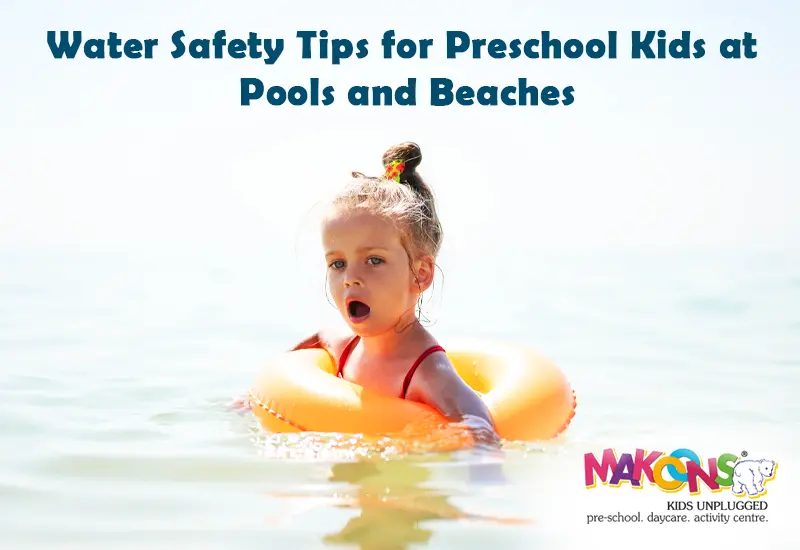
One of the most thrilling childhood aspects is water play. It is the instinct of young children to splash in the pool, run along the shoreline or have fun with buckets of water. Though water activities are enjoyable and reviving, they need close supervision- more so preschoolers. Knowledge of water safety among children is one of the necessary conditions that parents, teachers, and caregivers should possess to ensure that children are able to enjoy the water without the needless risks.
Preschool children are active, inquisitive and their sense of danger remains unaware. Due to this fact, adults need to establish specific safety habits and have simple safety rules that will keep them safe at the pools and the beaches.
Why Water Safety Matters?
Even shallow water may be hazardous to a young child. Preschoolers fail to realize that accidents can occur very fast. Child safety near water should be taught as early as possible, thus making children have healthy habits and minimize the risk of accidents when at play.
Water safety does not necessarily concern avoiding accidents; it is also associated with children being confident and having fun in a safe place. This is because with early teaching of safety rules, kids are more open to experimentation and acquisition of new skills.
Pool Safety Tips
Swimming pools are also known as a favorite playground, although there are challenges associated with it. These are key rules related to the safety of the pools that adults who are at preschool should observe:
- Always Supervise Closely
One should have an adult nearby at all times. Supervision is not a bargain even when a
child is conversant with simple water skills.
- Wear Correct Floatation Devices
Arm floaties are not the most dependable. Rather, preschoolers should have approved
life jackets. This assists in strengthening swimming safety preschool programs.
- Teach Simple Pool Rules
Be brief and make instructions clear, e.g.:
- Walk, don’t run
- No pushing
- Stay in the shallow area
- Keep your head above water
Rules are best repeated many times in lessons on safety during preschool by children.
- Check the Water Depth
Ensure that the surrounding is not too deep so that the child can stand in the pool before
entering it.
- Keep the Pool Area Clean
Take out the toys when they are not being used. Children can be enticed to their pool by
toys and may end up accessing the pool without supervision.
Beach Safety Tips
The seashores are thrilling and unpredictable. Safety is further enhanced by waves,
open water and crowded areas. These beach safety measures can be used with children when visiting the beach with preschoolers:
- Choose Safe, Calm Areas
Choose beaches that have lifeguards and swimming areas. Search or find signs or flags
of safe water.
- Stay Close to Your Child
The ocean can change quickly. One should walk with his child near the water and hold
his hand, particularly when in case of powerful waves.
- Watch for Rip Currents
Describe, using simple language, that powerful water may tug people. Although they
may not realize all of this, they get to learn that deeper water is hazardous.
- Apply Sunscreen and Hydrate
Safety also includes sun protection. Apply sunscreen frequently and ensure that children
drink a lot of water.
- Set Boundaries
Draw definite boundaries such as, do not go beyond this line, or, remain in open sight.
Preschoolers react to visual limits.
Water Safety among Preschoolers
The rules are as important as knowing how to teach kids water safety. Children acquire knowledge by repetition, using of simple words and using practical examples.
- Use Stories and Visuals
Children gain knowledge about safety with the help of books, images, and even simple
demonstrations. It is better to demonstrate to them what safe behavior should be like
rather than to talk extensively about it.
- Practice Through Play
Make safety lessons more like games:
- “Freeze when I say stop!”
- “Teach me to walk about the pool!
- Shall I find the shallow water?
These activities make lessons fun learning processes.
- Explain the Reasons
Rather than running can make you slip, as opposed to, Don’t run. Preschoolers are
more cooperative when they get to know the why.
- Model Good Behavior
Children copy adults. You just stroll leisurely around water, put on a safety vest or remain
within your area of zone and the kids will follow.
Preschoolers Fun and Safe Water Activities
Water play does not necessarily need deep pools and open beaches. The following are water fun activities that can be provided by preschool teachers and parents:
- Splash tables
- Water balloons
- Pouring and buckets.
- Floating toys and foam letters.
- Little supervised inflatable pools.
- Cup and funnel sensory tubs.
Such activities enable the children to have a safe water exploration and develop coordination and creativity.
Development of Safety Habits at an Early Age
Routines enable young children to learn. Repeated safety messages make them realize that water is not a serious issue but it should be respected. The following are easy habits to be taught:
- Ask an adult and then approach water.
- Issue a safety vest when necessary.
- Stay close to the group
- Keep hands to themselves in the pool.
- Move slowly around slippery surfaces.
Such habits are introduced into daily lesson of preschool safety training to enhance their consciousness.
Adults Water Safety Role
The adult is always in charge of the child safety around the water. Active supervision cannot be substituted with any safety tools and devices. Adults are expected to remain vigilant, be undistracted and be near enough to be able to respond instantly.
Adults should also be equipped through basic first aid and CPR in addition to supervision. This can be life saving because one knows how to respond in case of an emergency.
Conclusion
Water play is a great childhood activity that, when guided can be safe, as well as enjoyable. Water safety lessons among children at an early age would allow such kids to develop confidence, limits, and water stewardship. At pools, as much as at beaches, children depend on adults to establish rules and provide supervision as well as provide an atmosphere in which fun and safety are integrated.
We can provide freedom to preschoolers to have fun in the water and at the same time keep them safe by learning about preschool pool safety regulations, applying necessary beach safety precautions when being with the children, and implementing the same teaching strategies. Once safety is an inherent element of play, children get to learn to value water and remain unafraid as they play around.
How can parents keep preschoolers safe around pools and beaches?
Parents can keep children safe by staying within arm’s reach, setting clear water safety rules, and supervising them at all times when they are near water.
Should preschool kids learn swimming at an early age?
Yes, basic swimming lessons can help preschoolers feel more comfortable in water and learn simple safety skills, but supervision is still necessary even if a child knows how to swim.
What safety rules should preschoolers follow near water?
Children should follow simple rules such as never going near water without an adult, not running near pools, and always swimming in designated safe areas.
What should parents teach kids before going to the beach or pool?
Parents should teach children to ask permission before entering the water, stay close to adults, and understand basic safety signs or instructions from lifeguards.







 Twitter