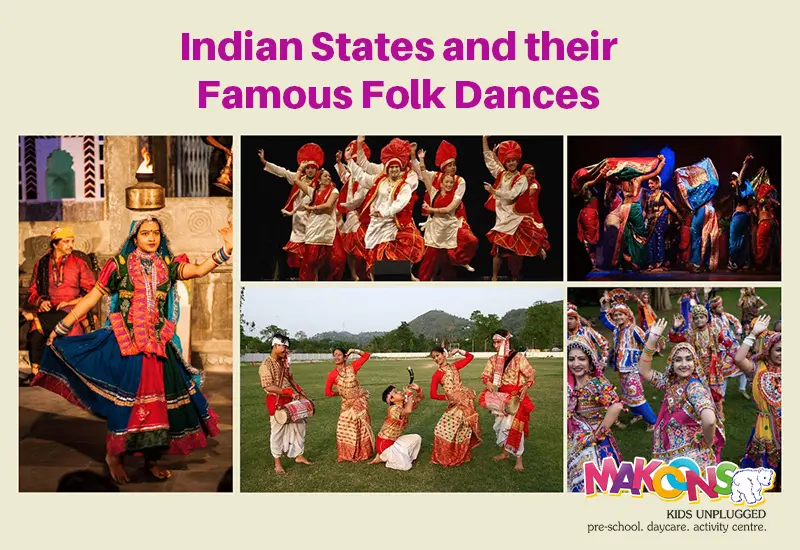
India is a colourful, musical, tradition-filled and party land! Folk dances are one of the most thrilling elements in our culture. Each state of India has a specific type of dances which reflect the history, lifestyle and happiness. Legally educating children about Indian folk dances in kids is an excellent factor to assist them associate themselves with a rich Indian heritage.
As a parent, a teacher or a student, you will find there will be no learning with regard to state wise dances India that you will find difficult, dull, or energy consuming. We will go on a tour of various states with their popular dances, which are ideal in preschool cultural life, and preschool theme lessons in India!
What Are Folk Dances?
The folk dances are traditional dances that people do in festivals, harvests, weddings, and even in celebrations. They tend to be rich in rhythm, colourful costumes and music. The dances are simple to learn and are suitable for the amusement of Indian culture in schools.
Indian States and well known Folk Dances (Simple to learn) of India
The following are some of the names of folk dances in India explained in a child friendly manner:
| States | Famous Folk dance |
| Punjab | Bhangra |
| Gujrat | Dandiya/ Garba |
| Maharashtra | Lavani |
| Rajasthan | Ghoomar |
| Haryana | Jhumar |
| Bihar | Jat – jatin/ Bidesia |
| West Bengal | Baul/ sanathali dance |
| Uttarpradesh | Birha/ charkula |
| Odisha | Dalkhai |
| Sikkim | Mask dance |
| Assam | Bihu |
| Arunachal Pradesh | Ponung |
| Nagaland | War dance |
| Meghalaya | Nongkrem dance |
| Jharkhand | Chhau |
| Himachal Pradesh | Nati |
| Uttrakhand | Garhwali & Kumaoni folk dance |
| Goa | Fugdi / Dekhni |
| Kerala | Thiruvathira |
These Indian dances made simple, and explained using straightforward language make kids learn at a faster rate and dance without fear.
Related Topic: Learn 50 Fruits and Vegetable Names in English and Hindi with Makoons Preschool
Why do Children Learn about Folk Dances?
There are some great reasons, these are some of them:
- Helps children to comprehend our culture.
- Enhances physical muscle tone, rhythm & confidence.
- Encourages team-spirit and happiness
- Ideal in pre-school culture events and school events.
- Enjoy entertaining celebrations of such festivals as Navratri, Baisakhi, Onam, Bihu, etc.!
Learning Fun Classrooms – Cultural Education Preschool
These creative activities can be attempted by teachers:
1. Folk Dance Dress-Up Day
Kids choose a state and dress in traditional costumes — adds excitement;
2. Map the Dance
Put Indian states on a large map and allow children to pair dances – a didactic play.
3. DIY Music
Prepare plain musical instruments such as dhols (drums made of cardboard) or stick props of Garba / Dandiya.
4. Story Through Dance
Explain the reason behind each dance (harvest, celebrations, devotion) — builds understanding & imagination.
These practices complement cultural education preschool programs very well.
Related Topic: A Fun and Easy Way of Learning Indian States and Capitals for Kids: Makoons Preschool
Tips for Parents
- Present basic dancing videos to children at home.
- Folk music at the play time.
- Ask grandparents to recount memories about dancing.
- Practice easy steps together — a great bonding time!
These minor activities increase the pride in the Indian heritage.
Best Theme events in Preschool India
| Festivals / Events | Suggested Folk Dance |
| Independence day | Any state dance folk performance |
| Navratri | Garba / Dandiya |
| Baisakhi | Bhangra |
| Onam | Thiruvathira |
| New year welcome | Bihu or Ghoomar |
| Annual day cultural show | Mix of states wise dance India. |
This renders Kashmir, Goa and every place the kid favorite!
Conclusion
The folk dances in India are a festival of joy, music and togetherness. The idea of introducing children to the Indian folk dances to kids would preserve our traditions and create a solid cultural identity. Kids learn about the well-known dances of India, which are described in a simple and entertaining manner, and learn that there is something beautiful about every state.
Assam Bihu, Punjab Bhangra, Gujarat Garba or Rajasthan Ghoomar, there is a story behind each dance about our people and festivals. In order to continue dancing, learning, and celebrating Indian culture, then come on together!
Can you give some examples of Indian states and their famous folk dances?
Yes, for example—Punjab is known for Bhangra, Gujarat for Garba and Dandiya, Rajasthan for Ghoomar, Maharashtra for Lavani, and Assam for Bihu. Each dance has its own unique style and cultural meaning.
How can children learn about Indian folk dances easily?
Children can learn through fun activities like watching videos, participating in school performances, dressing in traditional costumes, and practicing simple steps during cultural events or festivals.
Are folk dances different from classical dances?
Yes, folk dances are usually simple, energetic, and based on local traditions, while classical dances follow strict rules, techniques, and formal training. Folk dances are easier for kids to learn and enjoy.
How can schools include folk dances in early education?
Schools can organize cultural days, dance competitions, and activity-based learning where kids perform different state dances. This makes learning fun and helps children understand India’s diversity better.






 Twitter