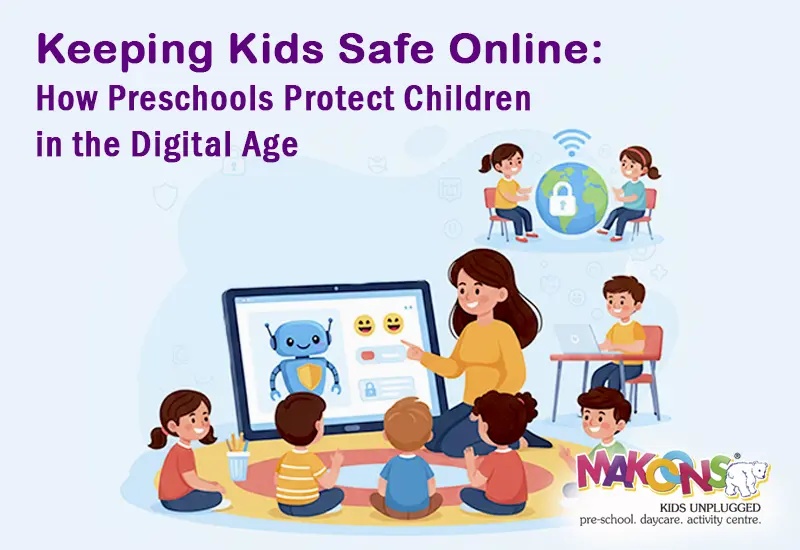
In today’s world, screens are present everywhere. It is not rare to find tablets, smartboards, and educational applications in preschool classrooms. The introduction of technology into the learning process has made it more enjoyable and interactive. However, it has also introduced some challenges. The major one is internet safety for children.
Children are very inquisitive. Kids are the ones who explore everything. But, on the other hand, they can easily be misled when it comes to telling safe things from unsafe ones. Consequently, the topic of online safety for preschool children is still very significant in our day. Now, preschool education has evolved beyond mere learning of the ABCs and counting. Good manners, such as the proper and intelligent use of technology, are among the good habits taught here. Let us consider first how the schools are safeguarding the kids in the online arena, and then how the parents can contribute.
Why Digital Safety Matters?
Children are spending more time with technology, even in school. It’s a part of learning now. But sometimes, even a harmless app or website can lead to unsafe content.
Online risks include:
- Unwanted pop-up ads
- Unsafe or fake links
- Sharing personal information by mistake
- Inappropriate videos or pictures
That’s why teachers and schools must stay alert. Their job is to make sure technology helps children learn safely. Online safety for kids is about protection, awareness, and guidance.
Safe Learning Platforms
Preschools carefully choose which apps and websites to use. They pick child-friendly platforms with no ads or chat features. These sites are made for learning and are safe for small children.
Some schools use special browsers that block unsafe websites. Others use filters to stop unwanted content. This is one of the most basic preschool cybersecurity measures.
Many preschools even have their own learning portals. These are private and password-protected. Only teachers and parents can access them. This keeps everything safe and controlled.
Teachers Play a Key Role
Teachers are monitoring all the time in virtual classes. They observe the children’s activities and support them constantly. Teachers first test a tool before allowing children to use it online. They guarantee that it is proper for their age group and safe.
Teachers also teach simple safety rules, like:
- Don’t click on random buttons.
- Don’t share your name or photo.
- Tell an adult if something strange appears.
These small lessons help children understand safety in a fun and easy way. It’s the start of child protection in digital learning.
Related Topic: Technology in Child Care: Good or Bad?
School Rules for Online Safety
Good preschools have clear rules for digital learning. These rules explain what children can use, how long they can use it, and how their data is handled.
For example:
- Children’s pictures and names are kept private.
- Devices are never left with children unsupervised.
- Online time is limited each day.
Such rules are simple but very effective. They make sure everyone follows the same safe practices. Having a proper safety plan is a big part of keeping kids safe online in school.
Parents Are Partners
Digital safety is not just the school’s job. Parents also have a big role to play.
At home, children may use phones or tablets. Parents can help by:
- Asking the preschool about its safety rules.
- Using parental controls on home devices.
- Keeping screens in open areas, not bedrooms.
- Talking to children about what they watch or play.
- Setting time limits for screen use.
Teaching Safety from an Early Age
Even small children can learn about online safety in simple ways. Teachers often use stories or activities to explain these ideas.
For example, a story might show a character who asks an adult before clicking on anything new. Or a game may teach about using technology politely and safely. Children remember these lessons because they are told in a fun and friendly way. It’s an easy way to build internet safety in preschools.
Safe Devices and Networks
Preschools also focus on the technology itself. They make sure all devices are safe to use.
This includes:
- Using antivirus software
- Installing updates regularly
- Keeping strong passwords
- Using secure Wi-Fi networks
Some preschools even have IT support to check everything. This keeps systems secure and prevents problems.
Protecting Personal Information
Online privacy is a big concern today. Many apps ask for data, but preschools are careful about what they share.
Good preschools never post children’s names or photos publicly. They also avoid apps that collect personal information. Data like parent contacts and student details are kept private. Only teachers and authorized staff can access them.
This ensures strong child protection in digital learning. Privacy is treated with the same care as physical safety.
Balanced Learning
Technology is useful, but too much of it is not healthy. Preschools know this. They make sure children spend limited time on screens.
After a short digital activity, children might do art, dance, or play outside. This keeps learning balanced. It also protects their eyes, posture, and mental well-being. The goal is to use technology as a tool, not as the main way of learning.
Balanced learning is another way of ensuring online safety for kids.
Training for Teachers
Technology keeps changing. New tools appear every year. So, teachers need to stay updated.
Preschools arrange regular training for teachers. They learn about safe platforms, privacy rules, and online threats. This helps teachers guide children better and prevent problems early. Trained teachers create safer learning spaces for everyone.
Communicating with Parents
Good preschools stay in touch with parents about digital learning. They send updates on what tools are used and how safety is maintained.
Some schools also hold meetings or webinars on internet safety in preschools. Parents can ask questions and get advice on managing screen time at home. This open communication builds trust. It ensures that both parents and teachers work with the same goal, keeping children safe online.
Encouraging Good Digital Habits
Safety isn’t just about blocking danger. It’s also about teaching children how to behave online.
Preschools slowly introduce the idea of digital manners. Children learn not to click or type without asking. They learn that online time is for learning, not for random play. These small lessons help children build safe habits from the start. Just like they learn to cross the road safely, they also learn to “surf” safely.
Trusted Technology Partners
Preschools often work with trusted software providers. These companies create safe apps and tools specially made for young learners.
These learning tools protect children’s data and offer ad-free content. They help schools focus on teaching instead of worrying about security. Such partnerships make preschool digital safety stronger and more reliable.
Related Topic: How to Hire the Right Teachers and Staff for Your Preschool?
The Bigger Picture
Digital learning is here to stay. It makes lessons more engaging and fun. But safety must always come first.
Preschools today understand this very well. They use strong preschool cybersecurity measures, safe apps, and careful monitoring. Teachers are trained. Parents are informed. Children are guided gently. When everyone works together, technology becomes a friend, not a risk. Children can enjoy learning online while staying protected.
Because keeping kids safe online in school is not just about blocking threats. It’s about teaching awareness, care, and responsibility.







 Twitter