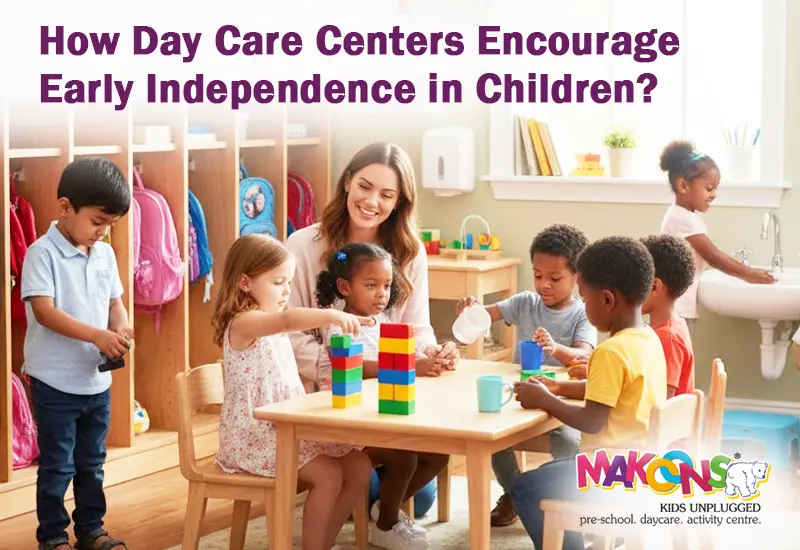
Helping a child learn independence is one of the greatest life skills that a child has. Professionals and parents are trained to teach children to be independent, rather than increase their dependence.
Routines are one of the strongest parenting strategies to promote a child’s independence while at the preschool age. For instance, when a child hangs up their bag, washes their hands before meals, and begins to put toys away, over time they develop behaviors that support self-regulation and are stepping stones to independence.
How Daycare Programs Foster Independence?
1. Promote Self Help Skills
Feeding and Dressing
Children are encouraged to eat independently using child-size utensils with little assistance from educators who prompt the children to try to do it themselves. Clothing items, such as putting on shoes and zipping jackets are small independent victories that lead to self-discipline and their independence.
Toileting
Most preschool daycare programs develop a toileting routine into daily practice. Caregivers help but encourage children to complete the toileting process independently. Successful toilet training supports fundamental independence and self-confidence.
Provide Opportunities for Decision Making
Selecting Activities and Choices
In a childcare developmental preschool program, typically children are involved in making choices for potential activities. For example, if the teacher offered children the choice to play with a puzzle or get elements to draw then the children would decide which activity to participate in. Making simple choices gives children a feeling of control and teaches them how to make decisions.
Learning the Consequences
Teachers support children understanding the consequences of their choice. For instance, if a child chooses to not participate in a planned craft activity, they learn to accept that they are able to choose not to participate, but the child will also miss out on that experience. These small lessons will create responsibility and encourage children to practice critical thinking.
Responsibility through Daily Tasks
Classroom Helpers
This one is straightforward! Most daycare centers use roles like “line leader,” “snack helper,” or “plant caretaker.” These responsibilities help kids feel important, build their self-concept, and support independence skills for kids in real life.
Cleaning Up and Organizing
At the end of everyday activity, children are encouraged to clean up their toys and art supplies. This quick and simple process instills a sense of accountability and respect for the shared space.
Social Independence and Collaboration
Learning to Interact with Others
Developing independence doesn’t just include physical skills, but social independence as well. Daycare preschool type activities encourage children to play, share, and problem solve with others, together.
Managing Conflicts
Teachers will support children learning to state their emotions; listening to others and resolving directly and with respect. These experiences build self-awareness and emotional independence in expectations for other children.
Emotional Independence and Self-Regulation
Recognizing Feelings
In daycares that have a structure, caregivers will introduce feelings and emotions through discussions and stories. Kids will be able to see, recognize, and state that they are mad, happy, or frustrated.
Coping Skills
Daycare programs will also normally include some simple mindfulness or breathing exercises to create self regulating strategies for children to calm themselves and manage their feelings. These strategies will promote independence from you and the parents and support better management of stress and disappointment.Giving children options to choose helps promote a sense of control and support decision making.
Consequences of Choice
Teachers help children realize the consequences of their choice. For example, if a child chooses to opt out of a planned craft, the child learns that they are able to choose not to participate, however the child also misses that experience. These small lessons help create responsibility, and build children’s ability to engage with critical thought.
Contrasting Home with Daycare Learning Experiences
To appreciate the importance of daycare independent kids programs, we will take a look at how independence is fostered at home and daycare.
| Aspect | At Home | In Daycare |
| Guidance | Usually 1-on-1 with parents | All group-based with trained educators |
| Learning | Child-centered family routine | Structured curriculum building independence |
| Social Exposure | Child will interact with family or friends only | Constant engagement with peers daily |
| Responsibility | Adults do that for the child | Children are encouraged to take small responsibility chores |
| Emotional Growth | Emotionally safe environment | Withdrawal of comfort and promote self-regulation |
This comparison shows how daycare and home learning experiences are both important factors to the child’s development. Though at home parents raise their child with emotional security, daycare programs contribute to the collaborative experience for children to build independence.
Also Know: Which is the Best Daycare Centres in Indirapuram Ghaziabad for Working Parents
The Educator’s Role in Developing Independence
Observation and Encouragement
Teachers in child development daycare centers observe each child’s development for readiness and encourage the child to advance forward each day with praise, patience and appropriate challenges. But they will never push a child to go ahead of him/her.
Environment Set-Up
The organization of a daycare classroom is purposeful for independence. The materials used are in the children’s view and within reaching distance. The children are invited to see what objects they would like to touch and engage with on their own during their time there.
Safety and Support
As a child develops independence as part of their daycare experience, safety practices in the class are also in place. The teacher will allow the child the freedom to explore while keeping supervision of the child’s interactions with his/her peers without risk in the environment. Supervising is an important part of how a daycare educator is supporting independence, and is one of the unique daycare education tips.
Preschool Daycare Activities That Encourage Independence
Self-Care Corners
A place for children to wash hands, brush teeth (with support), and put things in their own spot.
Role-Play Games
Acting out “cooking” or grocery shopping or to the doctor encourages decision making and problem-solving, which are two important parts of a child’s independence skills.
Group Projects
Working together on a group block build or an art project helps children work together and express their own individual ideas.
Outdoor Explorations
Going for nature walks, or outside play teaches children to observe and take turns while following safety rules. While they explore, they are learning valuable independence lessons in the real world.
Supporting Independence at Home
Encroaching Small Responsibilities
Parents can continue what day care or preschool centers begin by giving children age-appropriate responsibilities at home. This might include setting the table, watering plants, and dressing. This experience gives young children a sense of the hallmark skills of preschool daycare activities.
Allow Safe Choices
Allow a child to choose from 2 options when picking an outfit to wear, a snack to eat or a bedtime story to read. While the options are slightly limiting, the act of making a decision is building confidence and autonomy.
Be Patient with Errors
Most independence comes with some success and failure. You do not have to correct every error; give the child a chance to learn. The patience and support that you find in daycare educational tips should be provided in the home setting also.
Long-Term Benefits Of Promoting Independence
Children who experience independence in their early years generally do better academically and socially as they age. The patterns we create through child independence preschool and daycare child growth programs is a foundation for global life skills.
- Confidence: Things to do and accomplishing tasks builds self-esteem.
- Problem Solving: Independence helps practice complex analytical thinking.
- Social Skills: Independence to interact bolsters communication.
- Ownership and Responsibility: Children learn to be responsible for their choices and feelings.
- Resilience: Independence develops the first process for emotional stability.
These outcomes are evidence that independence is not simply a skill, but a mindset — that continues to shape identity and personality long after preschool.
Related Topic: Best Daycare Franchise in India | How to Start Your Own
Parental Involvement: Key Among Balanced Growth
Even as children engage in daycare independence and standards of learning, parent engagement continues to be of utmost importance. The balance of organized learning with daycare and safe emotional security in the family home creates a perfect balance for daycare child growth.
The ability for teachers and parents to connect through providing feedback, maintain routine, and celebrate milestones helps children feel supported transitioning to each new step of independence.
Conclusion
Independence cannot be turned on in one’s child overnight. Independence develops through trust, encouragement, and consistent learning by doing. Modern daycare independence kids programs are designed to help children learn about their potential, initiative, and to celebrate challenges in an enjoyable way.
The balanced focus on child development daycare principles centers children and families in a unique combination of organized homes with play based learning. Day care centers provide children with a toolbox to use for the rest of their lives with confidence and curiosity.
To parents, understanding the well-intentioned efforts of teachers at daycare provides some comfort in knowing you are not just paying for a place for your child to be while you work. It should provide some sense of comfort in understanding that dinner, snack time, and circle time helps build your child’s brain and personality learning skills of independence. So, when you find the right daycare program, you are not just finding a place for your child to spend time while you work, you are investing in their skill orientated journey for independence, confidence, and capability.
Also Know: Daycare Franchise Cost in India: Full Price Breakdown







 Twitter