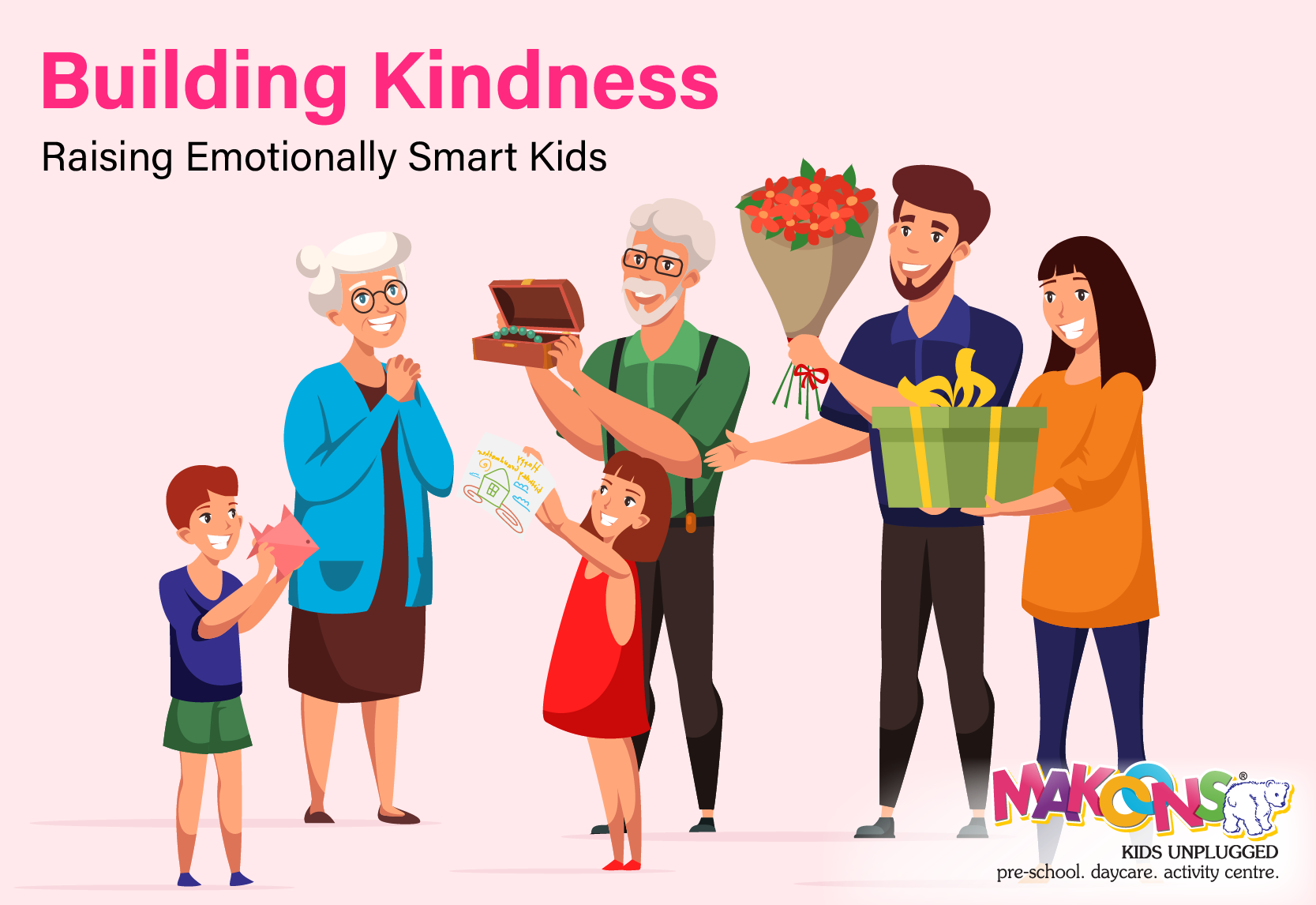
In a world where grades and achievements are used to define success, emotional intelligence is a skill that silently defines how a child will live a happy life and relationships throughout his or her life. Breeding emotionally intelligent children does not simply mean to teach them to say thank you or sorry, but to make them sensitive to emotions, both their own and the other people. Parents can also make hearts as well as minds with the help of teaching their children kindness and empathy.
We will discuss the development of emotional intelligence among children, its importance and how parents might develop it just by giving their children simple and daily experiences of love and understanding.
What Does Emotional Intelligence in Kids Impose?
Emotional intelligence among children can be identified as the ability to identify, communicate and command them in a constructive manner. It entails such abilities as self awareness and social understanding as well as empathy. A child possessing a high level of emotional intelligence will be capable of recognizing their emotions (I am angry because…), managing anger and being sensitive compared to the other people in the vicinity.
Psychologists have five key elements that they are likely to employ in defining emotional intelligence:
- Self-awareness – Learning about the feelings that people have and their effects.
- Self control- Learning to stay healthy and in control.
- Motivations – Then be focused and positive.
- Empathy – The awareness of others.
- Social skills – Developing positive and strong relations.
When parents devote their time to raising emotionally intelligent children, they are providing them with resources to succeed in life, strength, gentleness, and how to have positive relationships.
Read more : Why Emotional Intelligence Matters More Than Grades?
The Importance of Teaching Kindness to Children
Being nice is not merely about good manners. It is an effective emotional ability that makes children attached to other people and makes them feel special. By showing kindness to kids, they are taught that they are able to make others feel better- and that is also good!
The lesson of kindness into children enhances their psychological and emotional health. Research demonstrates that friendly children tend to be happier, less stressed and accepted more in society. A kind classroom will be a secure environment in which to learn and experience emotional development.
This is how benevolence works out to the advantage of children:
- Creates confidence and interpersonal trust.
- Minimizes violence and abuse.
- Enhances emotional affiliations.
- Encourages compassion and team work.
The basis of social emotional learning in kids is therefore kindness, a life-long skill in shaping their thinking, feeling and caring.
The Importance of Social Emotional Learning to Kids
Social emotional learning (SEL) educates children to handle their emotions, make objectives, empathize, and make responsible choices. Preschools and schools that underlie SEL provide an environment through which children not only acquire academic but also life skills.
To develop emotionally among preschoolers, SEL may start at the age of three and through:
- Friendship role-played scenarios.
- Discussing storybooks based on emotions.
- Labeling and detecting emotions.
- Developing sharing and helping.
Through joint efforts of parents and teachers to model empathy, children get to understand that emotions are normal, and dealing with them is a growing up process.
Empathy Activities for Children
The key element of nurturing emotionally intelligent children is empathy. It makes the children learn that people can be different and that you should be concerned that they are different. The following are some of the basic empathy exercises that can be practiced by parents at home with children:
1. Emotion Cards
Make or purchase cards with various facial expressions on them. Ask your child to make a guess on what the feeling was and discuss instances in which your child has experienced that feeling.
2. Storytime Reflection
You can ask such questions as How do you think the character felt after reading a story. or What then were you going to do in their place?
3. Kindness Jar
Whenever your child does something nice such as helping, sharing and soothing up, wage an addition to a jar; a bead or a note. Thank you for every good thing that has happened throughout the week.
4. Feelings Chart
Put a daily chart on which kids can put their mood with stickers. This is assisting in emotional awareness and expression.
5. Helping Hands
Teach children to do a favor, even minor ones such as feeding stray or drawing a card on behalf of a friend or to help in chores. The actual actions in the real world result in long-term empathy.
Such activities transform learning into an experience as they assist children to live their values of compassion, and not only learn them.
Parenting Secrets of Emotional Development
Parenting is significant in emotional development among pre-schoolers and the older kids as well. Children mimic adults, and, therefore, your reactions and behavior define their emotional reality. These are some of the parenting tips towards the emotional growth:
- Be a Role Model – Be Emotional and Let Go. Whenever you say, I am so frustrated but I will take a deep breath and your child will know how to self-regulate.
- Justify Emotions – Don’t say “Don’t cry,” say, “I can tell that you are sad. Let’s talk about it.” Feelings can only be validated, and this can teach empathy and self understanding.
- Promote Problem-Solving – Children should be encouraged to think of solutions to problems instead of solving them when conflicts occur.
- Establish a safe emotional environment – Turn the house into a place where there is no judgment or punishment of sentiments.
- You should praise the Effort and not only the Results – This gives one perseverance and gives one confidence.
With the help of regular support and empathy, parents are able to make everyday situations a source of emotional learning.
Preschooler Emotional Development
Preschool years (3-5 years old) are significant as far as emotional development is concerned. At this age, children begin to possess an emotional lexis, control impulsiveness, and understand the opinions of other individuals.
Preschools that incorporate social emotional learning to children like storytelling, art and group play are those that enable children to experience emotions in a safe environment. Parents can support this by:
- Promoting teamwork and collaboration.
- Reading books underpinning emotions.
- Calming down corners or a breathing game can be used.
Emotionally aware preschoolers have been found to demonstrate higher levels of concentration, improved social behavior and higher levels of empathy to their peers by the time they are of school going age.
Raising Emotionally Smart Kids Payoffs (Long-term)
With the emphasis on the emotional intelligence of children, we will raise the adult generation which will be capable of tackling the problem of stress, building relations, and making rational choices.. Emotional intelligence employees tend:
- Be able to work as a team player and leader.
- Manage conflicts amicably.
- Adapt easily to change.
- Be caring both in personal and professional life.
In a nutshell, the future of emotionally intelligent children is a good bet towards a better, more empathetic future.
Conclusion
Goodness and compassion are not moral lessons only, but are emotional muscles, which determine the whole life of a child. Parents can not only raise successful, but kind and loving human beings by focusing on emotional intelligence in children, trying to teach children to be kind, and encouraging children to learn social emotions.
When kids are taught to communicate, feel and treat feelings, then they become adults, who lead with heart, and that is the success story, the real story.
Read more : How do Parents Influence Their Child’s Behavior?
FAQs:-
What am I to do to train benevolence in a toddler?
Make simple actions: sharing toys, saying thank you or comforting others. Compliment nice demeanor and make this a manner of habit.
Is it possible to develop emotional intelligence at home?
Yes! Parents could establish emotional intelligence through the use of empathy activities with children, modeling empathy, and through daily conversation.
What is the contribution of preschool in emotional learning?
Social emotional learning preschools that concentrate on teaching kids have a system of activities such as group activities and story telling to help them learn more about emotions.
What is the way to know whether my child is emotionally intelligent or not?
Symptoms consist of the ability to identify the emotions of others, the ability to exhibit the emotional state of self-expression, and the ability to cope with frustration or anger in an adequate manner.






 Twitter