Handwriting is an important skill. Kids need it for school and life. But not all children enjoy writing. Some find it hard. Some get bored. Others avoid it because it feels like too much work.
The good news is that handwriting can be fun. With the right worksheets, kids start to enjoy it. Worksheets can make writing feel like play. They can turn practice into a game.
In this blog, we will talk about how worksheets help. We will see why kids like them. We will also look at handwriting worksheets for kids, fun writing activities, preschool handwriting practice, creative writing worksheets, fine motor skills worksheets, and playful handwriting exercises.
Why Worksheets Help Kids?
Worksheets give kids structure. Children like clear steps. A worksheet shows them what to do. They trace, copy, and color. It feels simple.
Worksheets also break big tasks into small ones. Instead of “Write the alphabet,” a sheet may say “Trace the letter A five times.” That feels easy.
Kids also enjoy designs. Worksheets can have animals, cars, or cartoons. They look fun, not boring. Kids stay engaged.
Preschool Handwriting Practice
Preschool is the first step. Kids are just learning to hold pencils. Their hands are small. Their grip is not strong yet.
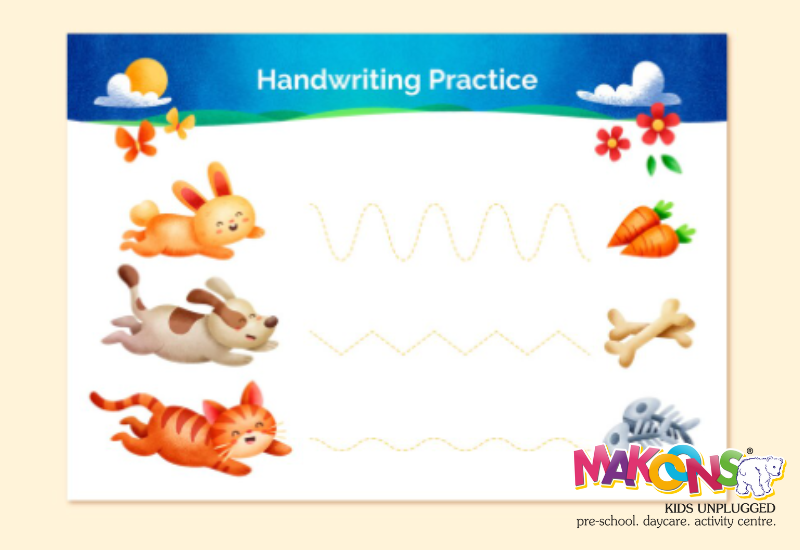
That is why preschool handwriting practice should be playful. Worksheets for this age have large letters. They include dots to trace. They use shapes and lines.
Examples:
- A big letter “B” with balloons to color.
- Wavy lines to trace like waves in water.
- Zig-zag patterns to follow with a crayon.
These worksheets train little hands. They build control. They prepare kids for writing words later. This is also where fine motor skills worksheets are very useful.
Playful Handwriting Exercises
Handwriting practice does not have to be plain. Playful handwriting exercises make it exciting. Here are a few:
- Trace and Race
Kids trace a letter. Then they drive a toy car along the traced line. - Rainbow Writing
Children write the same letter or word in many colors. - Join the Dots
Letters are made with dots. Kids connect them like a puzzle. - Animal Letters
A worksheet where “C” is shaped like a cat or “D” like a dog. - Maze Writing
A maze where tracing the letters helps kids reach the end.
These worksheets feel like games. Kids forget they are “working.” They just have fun.
Creative Writing Worksheets
Older kids need more. Simple tracing is not enough. They must write words and sentences. Creative writing worksheets help at this stage.
These worksheets mix imagination with handwriting. For example:
- A picture of a park with the line “Today I played at…” Kids finish the sentence.
- A page that says, “If my pet could talk, it would say…”
- A cartoon drawing with space for kids to write a funny dialogue.
These are not boring drills. Kids get to think, imagine, and write. Handwriting improves. Creativity grows too.
Fine Motor Skills Worksheets
Before kids write neatly, their hands need strength. Fine motor skills worksheets help build that strength.
Examples include:
- Tracing circles, triangles, and squares.
- Drawing spiral or wave patterns.
- Cutting along dotted lines with scissors.
- Matching objects by drawing lines between them.
These small tasks are powerful. They improve control. They train muscles in the fingers and wrist. With better control, handwriting becomes smooth and steady.
Fun Writing Activities Beyond Worksheets
Worksheets are great. But you can also mix them with other fun writing activities. Kids love variety.
Ideas include:
- Writing letters in sand or salt trays.
- Using chalk on the floor or wall.
- Finger painting alphabets.
- Making letters with playdough.
These activities feel like play. Yet, kids are still learning. Combine them with handwriting worksheets for kids to keep practice fresh.
Making Worksheets a Daily Habit
Worksheets work best when used often. But practice does not need to be long. Ten to fifteen minutes a day is enough.
Parents can set a small “writing time.” Teachers can add worksheets to class schedules. Short and regular practice gives the best results.
Rewards help too. Stickers, stars, or praise make children happy. Soon, kids look forward to playful handwriting exercises.
Read more : Top 10 Activities to Develop Better Handwriting in Kids
Tips for Parents and Teachers
Here are some simple tips:
- Start easy. Begin with lines and shapes before letters.
- Use themes. Pick worksheets with animals, cars, or favorite cartoons.
- Praise effort. Don’t wait for perfect handwriting. Celebrate small wins.
- Rotate sheets. Give different worksheets each time to avoid boredom.
- Add color. Let kids use crayons or markers, not just pencils.
These small steps keep handwriting practice positive.
Why Handwriting Still Matters?
We live in a digital age. Kids type on tablets and phones. Still, handwriting is important.
Writing by hand improves memory. It helps learning. It builds focus and patience. Kids who write well often do better in school. They take clear notes. They express thoughts better.
That is why handwriting worksheets for kids are still needed. They make handwriting practice fun and modern.
Conclusion
Handwriting can be fun. Worksheets help a lot. They give structure. They make writing playful.
From preschool handwriting practice to creative writing worksheets, there is something for every age. Fine motor skills worksheets make hands stronger. Playful handwriting exercises keep kids smiling.
As parents and teachers, we must keep kids motivated. Short, colorful, and fun worksheets do the job. Children improve without stress. Their confidence grows.
So next time your child says, “I don’t want to write,” hand them a fun worksheet. Watch their face light up. Handwriting will no longer feel like work. It will feel like play.
Read Also : Easy Daily Exercises Parents Can Do to Improve Kids’ Writing







 Twitter