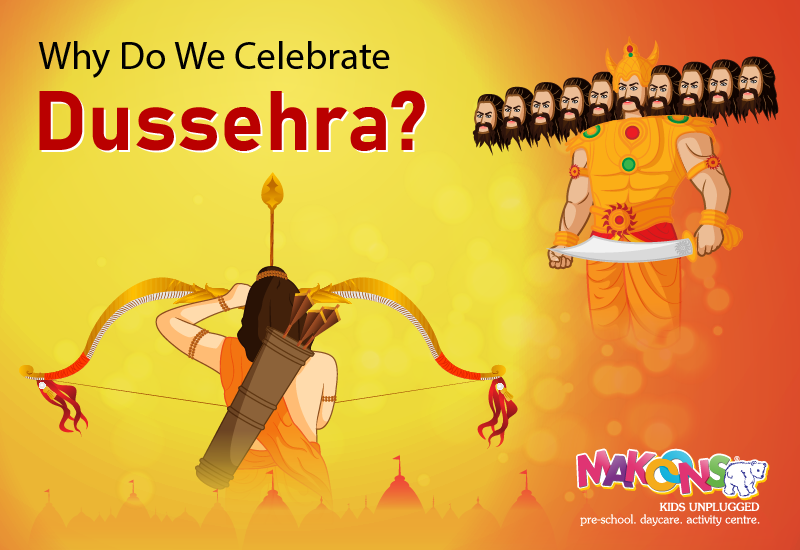
Dussehra is one of the cheerful and colorful festivals in India. It is full of lights and joy. Children love watching the plays, the fairs, and the fireworks. But many children ask a simple question: What is the significance behind celebrating Dusshera?
In this blog, we will explain the festival in very simple words. We will talk about the Dussehra story for kids, the Dussehra meaning for children, and also share Dussehra festival traditions. We will also add easy activities for Preschool Dussehra learning. Parents and teachers can use these ideas to make the festival fun and meaningful.
What is Dussehra?
Dussehra comes at the end of nine days of Navratri. It is also called Vijayadashami.
The word “Dussehra” means the defeat of evil. “Dush” means bad or evil. “Hara” means to remove or defeat. So, Dussehra is the day when evil is destroyed.
For children, we can say: Dussehra tells us that truth and goodness always win in the end.
Why Do We Celebrate Dussehra?
There are two main stories linked with Dussehra.
The Story of Rama and Ravan
The name Ravana, a demon king in the Ramayana, says it all. He had ten ugly faces. What made him clever was that he was also proud and cruel. He had kidnapped Sita, the wife of Rama.
Rama, with his brother Lakshmana and Hanuman, joined many other beings in their struggle against Ravana. The fight was long and troublesome. Eventually, the killing of Ravana with his bow and arrow happened on Dussehra, at sunset. That is why people burn huge figures of Ravana on this day. It shows that pride, lies, and cruelty must go.
The Story of Durga and Mahishasura
Another story comes from the goddess Durga. A demon named Mahishasura troubled both gods and humans. He was very strong. No one could stop him.
Finally, Goddess Durga fought with him for nine days. On the tenth day, she killed him. That day was Dussehra.
This is why Dussehra is also called Vijayadashami. “Vijaya” means victory. “Dashami” means the tenth day.
Both stories have the same lesson. Evil may look big. But good always wins. This is the heart of why we celebrate Dussehra.
Dussehra Meaning for Children
For children, Dussehra is not just about battles or demons. It is about values. It tells us to:
- Speak the truth.
- Be kind and helpful.
- Respect family and friends.
- Do not be proud or greedy.
- Always stand up for what is right.
Parents and teachers can explain that kids also fight small evils every day. For example, anger, lying, or not sharing toys. Dussehra teaches us to overcome these.
This makes Dussehra for kids meaningful and simple.
Dussehra Festival Traditions
Dussehra is celebrated in many ways across India. Here are some main traditions:
Burning Ravana’s Effigy
People make tall figures of Ravana. Sometimes they also make figures of his brothers. In the evening, these figures are filled with firecrackers and burned.
Children love watching this. Parents can explain that the burning shows the end of evil and the victory of good.
Ramlila Plays
Ramlila is a stage show of the Ramayana. For many days, actors perform scenes of Rama’s story. On Dussehra, it ends with the defeat of Ravana.
Children enjoy watching the story live. In preschools, teachers can also act out short Ramlila plays with kids.
Visiting Fairs
Many towns hold Dussehra melas. These fairs have rides, food, toys, and fun games. Children love the joyful atmosphere.
Parents can use fairs to teach kids about sharing happiness and community bonding.
Exchanging Leaves
In Maharashtra and nearby places, people give each other “apta” tree leaves. These are called “gold” leaves. It is a way to wish luck and wealth. Kids can join in by sharing leaves with friends and saying, “Happy Dussehra.”
Dussehra for Kids: Easy Activities at Home
Families can celebrate Dussehra at home with children in simple ways.
- Story Time: Tell or read the Dussehra story in short sentences. Use pictures or puppets to make it interesting.
- Craft Activity: Make a Ravana puppet from paper cups or sticks. Let kids knock it down with a toy arrow.
- Drawing and Coloring: Children can draw beautiful drawings related to Dusshera.
- Goodness List: Ask kids to write or draw one good habit they want to follow, like sharing or helping.
- Family Skit: Act out a short Ramayana scene together at home.
- Festive Food: Prepare sweets like ladoos with the kids’ help. Let them roll small ladoo balls.
These small traditions make Dussehra fun and educational.
Preschool Dussehra Learning Ideas
Teachers can include Dussehra in classroom activities. Here are some ideas:
- Circle Story Time: Tell the story of Rama and Ravana.
- Role Play: Children can dress up as Rama, Sita, or Hanuman.
- Good vs. Bad Chart: Make two columns. One for good habits like sharing. Another for bad habits like shouting. Kids can place cards in the right column.
- Ravana Puppet Game: Make a puppet with ten heads. Write one bad habit on each head. Kids can remove the heads one by one while promising to avoid those habits.
- Festive Songs: Sing small rhymes about Dussehra in the classroom.
These ideas make Preschool Dussehra learning enjoyable and easy.
Life Lessons from Dussehra for Kids
Dussehra teaches simple life lessons. Children can follow them every day:
- Truth wins: Like Rama, always be honest.
- Be brave: Like Durga, face your fears.
- Respect family: Rama fought for Sita. Love and protect your family.
- Avoid pride: Ravana was proud. Pride caused his defeat.
- Work together: Rama won with help from friends. Teamwork matters.
Parents can talk about these lessons during meals or bedtime.
Making Dussehra Fun and Meaningful
For children, Dussehra is about joy and learning. It is about stories, sweets, plays, and fairs. But it is also about kindness, truth, and courage.
When children ask, “Why do we celebrate Dussehra?” the answer can be simple:
We celebrate to remember that good always wins. We celebrate to remind ourselves to be kind, brave, and truthful. And we celebrate together to share happiness.
Conclusion
Dussehra is more than a festival of firecrackers and fairs. It is a day to teach children values.
Having fun with kids crafting, having plays, and small family activities can make Dussehra thrilling and purposeful for kids.
The Dussehra story can be told to children with explanations about what the festival means, along with very simple Dussehra festival traditions, making it a special day for parents and teachers alike.
Dussehra reminds us of one strong lesson: Goodness always wins. This is the gift we can pass on to children through the festival.
Read Also : Top 10 Fun Navratri Activities for Preschoolers and Kids







 Twitter