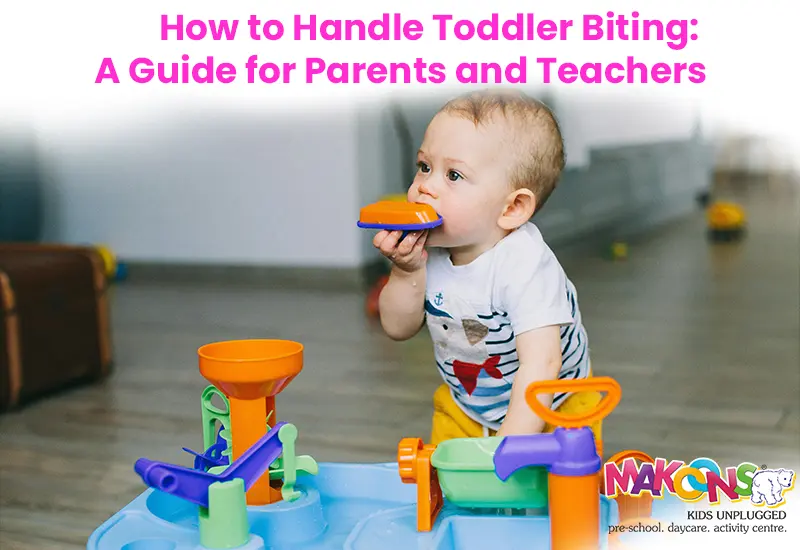
Consider this: A teacher gently informs you, “Your toddler bit another child today,” as you are at preschool drop-off. This circumstance is startling and even embarrassing for a lot of parents. The fact is, however, that toddler biting occurs far more frequently than you may imagine. It doesn’t imply that your child is violent or “bad.” It simply indicates that they are attempting to communicate in the only manner in which they are capable.
This blog will help teachers and parents understand why toddlers bite, how to prevent toddler biting, and how to use easy ways to manage preschool behaviour.
Why Toddlers Bite
Understanding why is crucial before coming up with solutions. Language, emotions, and social skills are still being developed in toddlers. Biting turns into a rapid way to convey excitement, annoyance, or even curiosity.
Here are some common reasons why toddlers bite:
- Teething discomfort – The pressure from biting soothes their gums.
- Lack of words – They can’t yet say, “I’m upset” or “That’s mine,” so they bite.
- Frustration or anger – Over toys, attention, or space.
- Exploration –Toddlers may sometimes bite to explore new things , just as babies put everything in their mouths to feel and sense.
- Attention-seeking – Biting can occasionally cause a strong reaction that they may repeat the same thing again and again.
Knowing the cause makes it easier to find the right toddler biting solutions.
Parenting Tips for Toddlers Who Bite
- Stay calm – Yelling or punishing may make the situation worse.
- Use clear words – Say firmly, “No biting. Biting hurts.” Keep it short and simple.
- Offer alternatives –Provide chewy snacks, teething toys, or words like “stop” or “mine” to encourage..”
- Model empathy – Show how to be gentle: “We use our hands to hug, not to hurt.”
- Watch triggers – Watch out the environment clearly where biting occurs
- Praise good behaviour – When your kid shares or expresses their emotions without biting and irritating, give them praise and reward them.
Handling Biting in Toddlers at Preschool
Biting can cause disruptions in the classroom and cause anxiety in other parents, according to teachers. Here are some methods for dealing with toddler biting.
- Immediate redirection –”We don’t bite our friends,” you said, gently separating the biting child.
- Comfort the victim first – Ensure the bitten child feels safe and cared for.
- Teach alternatives – Use gestures to encourage or say something like, “I don’t like that..
- Document incidents – Keep notes of when and why biting occurs to identify patterns.
- Work with parents – Consistency at home and school is key for improvement.
Preschool behaviour management becomes easier and more encouraging when these techniques are used.
Toddler Biting Solutions That Work
Let’s now explore some doable remedies for toddler biting that educators and parents can implement:
1. Identify Triggers
Check to see if the child bites during group play, transitions, or when they’re exhausted. Knowing the triggers makes prevention simpler.
2. Provide Teething Relief
Provide your kid some teething relief items like cold fruit, chilled teething rings, or safe chew toys.
3. Encourage Communication
Teach young children basic phrases like “no,” “stop,” and “assistance.” Moreover, sign language can lessen annoyance.
4. Maintain a Calm Environment
It is to be found that a kid misbehaves when he or she is overstimulating . Biting habits can be decreased by maintaining calm and predictable routines overall.
5. Reinforce Positive Behaviour
One should not underestimate the power of positive reinforcement. You should appreciate when toddlers share, speak, or behave well with others.
6. Stay Patient and Consistent
It takes a lot of time to break the habit of biting. Educators and guardians must always approach with the same manner.
Preschool Behaviour Management: A Teacher’s Role
Social behaviour is greatly influenced by preschools. Teachers can help young children with:
- Role-play games – Practicing “gentle hands” or “using words” during circle time.
- Emotion charts – Helping children point to how they feel when words are hard.
- Routine breaks – Avoiding long sitting times that may cause restlessness.
- Small group activities – Keeping playtime manageable to reduce conflicts.
Children can learn self-control in a safe and nurturing environment with the help of this structured preschool behaviour management program.
Lifelong Benefits of Addressing Early Biting of Toddlers.
- It gives young children lifelong skills like:
Expressing their feelings with words instead of actions that cause others to suffer.
- Teaching them about empathy.
Building trust in healthy friendships and relationships.
- Managing frustration without aggression.
Stated differently, early guidance transforms today’s obstacles into tomorrow’s advantages.
Final Thought
Although biting is a typical developmental stage, it can be upsetting for both parents and educators. Toddlers can learn healthier ways of expressing themselves if they are given the right support, empathy, and patience. Keep in mind that each child’s path is different, and that treating biting with structure and love helps them develop into kinder, more self-assured adults.
Read Also : Best Teaching Method for Toddlers: Make Learning Fun & Effective
FAQs on Toddler Biting
How can parents stop toddler biting at home?
Parents can help their kids to stop biting by remaining composed and providing chew toys and rewarding them when they behave goods.
What should teachers do when a toddler bites in preschool?
First you have to redirect the biter calmly, soothe the bitten area of the other child, and provide them with gentle alternatives.
Are there simple toddler biting solutions that really work?
Yes you can help them by identifying their triggers and providing teething relief.
When does biting become a concern?
If your child is still biting after the age of 4 then it is concerning and you need professional guidance .
Can preschool behaviour management reduce biting?
Yes , Toddlers learn to behave better through acting , role play and well structured routines.







 Twitter