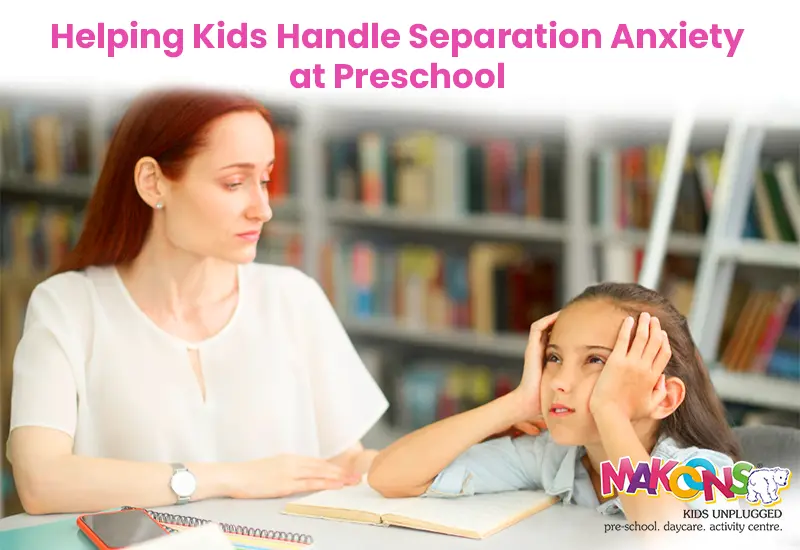
Starting preschool is a big step for children and families. There are new toys, new friends, and new learning experiences! There will be some worries, too. For little ones that may not have experienced being apart from their parents/carer, there is some anxiety. Separation anxiety is always normal for little children, especially in preschool. For most little ones this would be their first real little step to independence, and this can be a big step for them.
With enough time, preparation, and support, hopefully the child, their parents, or Carer, and the teacher can all work together to support the transition. This guide contains lots of practical ideas about supporting preschoolers’ transitions, so they feel safe, secure and ready to begin their preschool experience.
Understanding preschoolers’ separation anxiety
What is separation anxiety?
Separation anxiety is when children express nervousness – or worse when they are distressed – at being separated from the parent or carer. Separation anxiety commonly develops in children aged from 8 months – 3 years. According to research, it may return when a significant change happens like starting preschool.
What might be the reasons for anxiety being expressed when preschoolers begin preschool?
- New environment – New environments or new adults are an alien experience.
- Absence of comfort – Families/parents provide a high degree of comfort.
- Emerging independence – even though they are young preschoolers are beginning to have an awareness that their parents will provide them with a lot of certainty, and they will still want to explore.
Signs of anxiety in preschoolers.
- Crying or clinging during the drop off
- Refusing to let go of the parent/carer’s hand.
Of course you recognize the signs when your child is anxious. In preschoolers these signs may be:
- Claiming a headache or stomach ache.
- Not being able to connect or play with classmates.
A Parent’s Guide: To preschooler anxiety
Step 1: Validate the feelings.
Instead of dismissing the feelings or telling them, “You can’t feel that way,” validate their feelings. Saying things like, “I know this is hard for you, but I’ll see you soon.” This is the beginning of child separation support.
Step 2: Practice short separations
Before your preschool year begins, practice short separations by leaving your child with a trusted family member or babysitter. Over time and with longer separations, their confidence will begin to be built in being apart from you.
Step 3: Use the Same Goodbye Routine
This is important. Create a short and simple goodbye ritual such as a hug, kiss and a wave at the window. This goodbye routine should never change so that it becomes a safe and predictable action for the child. Do not ever sneak out on a child, this is only going to enhance their trust issues.
Strategies for preschool adjustment
Be at the Preschool early.
Take your child to the preschool before classes start. Usually, a short ‘tour’ might happen showing them the classroom, play space, possibly even visiting the teacher at this time – anything that will create some familiarity with the space can help relieve some fear surrounding preschool.
Comfort item.
Bring a comfort item such as a familiar stuffed animal, blanket or small picture of your family so that young toddlers feel that they are taking a little bit of home with them.
Begin with half days.
If possible, plan for a gradual start to separating from your child at the start of preschool. Short periods of separation create a break and space for the child to grow without being too uncomfortable.
Facilitating Child Separation: Parent’s Role
Stay calm, and it begins with you.
Your child’s feelings closely connect with yours. If you look worried, you may create a context where they don’t see a secure spot to go. YOU have to know that you are role-modeling excitement for the steps to preschool, and you need to talk positively about their first day and what to expect.
Don’t linger.
It doesn’t matter if we think it is comfort; seeing our child cry while we linger in our drop-off is never a good thing. It is always much better to say a quick and affectionate goodbye than to linger while parents take repeated attempts to leave.
Acknowledge effort.
Even if it’s a small win of finding comfort for ten minutes without tears, we should acknowledge it. When we acknowledge effort, we allow toddlers to feel proud of themselves and their achievement.
Teachers Role-support in Separation Anxiety.
Warm welcome.
Teachers can help relieve anxiety by simply welcoming children into the classroom with a warm smile or engaging them in an activity to mitigate the anxiety of leaving their parents.
Emotional Check in.
It also builds a relationship between teachers and children when teachers regularly ask children how they are feeling.
Collaborating With Parents.
Sharing some news about how children are settling in during the day with parents helps develop trust in families, and to provide assurance.
Mindful Coping Strategies for Preschoolers
Puppets and Using Play to Express Emotion
Through play therapy (dolls, drawings, role-play), children can act out their worries and fears while learning coping skills.
Books about preschool
Children’s books including ‘The Kissing Hand’ or ‘Auden Penn’s’ book can help to normalise children’s feelings of missing their parents while providing some comfort.
Teach Relaxation Strategies
Simple “smell the flower, blow out the candle” can help calm preschoolers down when they are upset.
Normal vs. Worrying Separation Anxiety
| Normal Separation Anxiety | When to Look for Help |
| The child cries at drop-off and is calm within a few minutes. | The child cries intensively for hours. |
| Before starting preschool, Child was mildly reluctant | The child did not want to go to preschool for 2-3 weeks. |
| The child adjusts after a few weeks. | The child is not attached and exhibits physiological symptoms persistently (nausea, headaches). |
| The child appears bored/excited when with peers during play. | The child completely withdraws and avoids socialisation. |
If children have intense anxiety for longer than a few months, parents may want to seek professional support from a paediatrician or child psychologist.
Parents’ Tips to Promote Safety During the Transition to Preschool:
While parents are experiencing separation anxiety and processing their feelings, they are wanting to ensure the preschool environment is a safe place. Parents can inquire regarding:
- Hygiene and cleaning protocols
- Staff-child ratio
- Health and emergency procedures
- Communication protocols for daily updates
When parents know that they are sending their child into a safe preschool environment, it makes letting go a little bit easier. If parents are confident in their child’s safety, it will provide children with confidence as well.
The Long-Term Benefits of handling preschool separation anxiety
Emotional Resilience:
Children learn that they are capable of navigating difficult emotions and transitions.
Confidence/Independence:
Accepting the separation anxiety that can occur when transitioning to preschool, is a great step in the process of transitioning the child towards preschool and in turn, produces a sense of accomplishment and helps to build confidence in the child, and ideally having a positive attitude towards the following years of school.
Positive Parent-Child Bond:
Knowing that they are supported and not forced into independence as parents, creates feelings of safety and trust between parents and children.
Improved Social Skill Development:
Once the feeling of separation anxiety is eliminated, children focus on making new friends, learning, and engaging in routine preschool activities.
Conclusion
It can be very common for children to experience anxiety in separating from family to transition into preschool; separation anxiety is a normal phase of life. Allowing some thought towards preschool with some appropriate adjusting strategies can help, which can be done in collaboration between parents and teachers in managing children’s anxiety. Remember, children also need emotional support when adjusting to the separation from home, not just encouragement.
Through using positive preschool transition strategies, establishing strengthening routines, and actively developing emotional support for their child during the adjusted separation timing, their family can improve the transition from home life into preschool life.
What children need to know is they are safe, loved, and their parents will always come back for them. With time and patience in a few weeks, most preschool aged children transition successfully, and what can seem like a big barrier becomes a wonderful milestone in no time.
Read Also : Essential preschool emergency kit 2025 – A safety guide







 Twitter