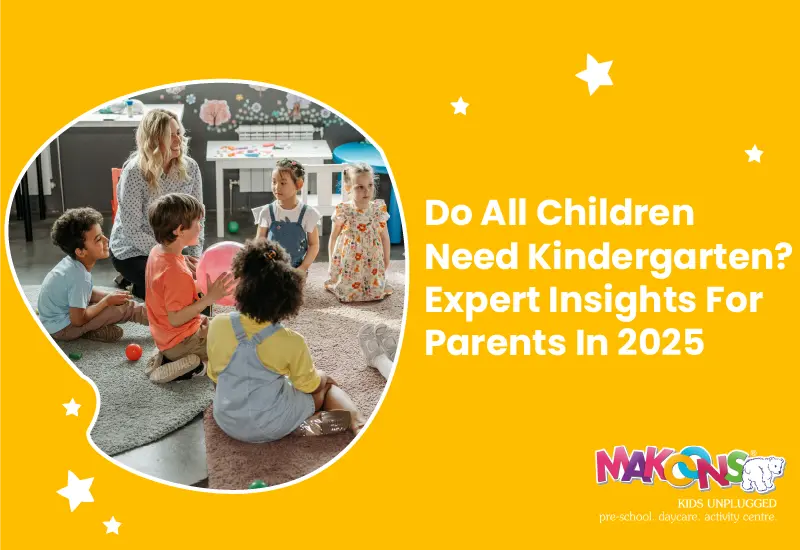
Kindergarten is frequently mentioned by parents when discussing their child’s entry into formal education. However, a frequent query is: Will kindergarten be required for all kids in 2025? Many parents are reconsidering whether kindergarten is necessary for every child in light of changing educational systems, homeschooling alternatives, and sophisticated preschool curricula. To better understand this, let’s examine professional opinions, parental worries, and the most recent studies.
What is Kindergarten and Why Does it Matter?
Typically, kindergarten serves as a transitional year between preschool and elementary school. Traditionally, it helps children (ages 4–6) practise reading, writing, counting, and social interaction while introducing them to structured learning.
Kindergarten isn’t always about academics. It is mainly about improving the abilities to solve problems, emotional intelligence, and peer collaboration. Actually, kindergarten provides the base for how kids view education throughout their whole lives.
But here’s the catch: Each child is different. While some kids do well in a kindergarten setting, others might gain just as much—or even more—from different learning settings.
In today’s time, Do All Children Really Need Kindergarten?
The short answer: Not really.
Education is more adaptable in the modern world. Traditional kindergartens, Montessori schools, homeschooling, and even specialised early learning centres are among the options available to parents. A number of factors determine whether a child “needs” kindergarten:
- Readiness of the child: While some kids require more time, others are inherently prepared for structured settings.
- Parental involvement: Kindergarten may not be strictly necessary for children whose parents are actively involved in their lives to learn the fundamentals.
- Learning environment: Kindergarten can be easily replaced by having access to nursery, preschool or home learning with good resources.
- Cultural and regional expectations: Kindergarten is optional in some nations but required in others.
In today’s time, some kid’s development experts stated that while kindergarten is not always required, it is very much important. Whether or not kids have access to engaging, developmentally appropriate learning opportunities—inside or outside of kindergarten classrooms—is more important.
The Benefits of Kindergarten
Kindergarten has numerous demonstrated benefits, despite not being required everywhere:
1. Academic Readiness
Kindergarten teacher – Early literacy, numeracy, and problem-solving skills in structured ways.
2. Social Development
Kindergarten implies interaction, sharing, and teamwork , these skills are very much important for both life and future education.
3. Emotional Growth
A resilient kid is influenced by overcoming obstacles, settling disputes, and being patient.
4. Routine and Discipline
Kids learn discipline from the regular offline classroom.
5. Exposure to Diversity
Young kids interact with their classmates from diverse backgrounds which helps them in balance motor skills and fosters tolerance and empathy.
Alternatives to Kindergarten in 2025
These options are frequently investigated by parents who decide not to enroll their kids in kindergarten: Preschool Programs: Nowadays, a lot of preschools offer kindergarten-level instruction.
- Montessori and Waldorf Education: Kindergarten-level learning is now covered in many preschools.
- Homeschooling: Flexible curricula created by parents are adapted to the child’s speed.
- Online Early Learning Platforms: nowadays, the use of digital tools in early education has increased by mass.
Apart from the format, the goal is to make sure that our kid gets enough emotional and intellectual stimulation.
What Experts Say in 2025
Although kindergarten is not the only route, education experts emphasise that it is still one of the best starting points for a successful educational journey.
“Children who skip kindergarten may still succeed, but they require strong parental involvement at home,” says child psychologist Dr. Meera Sharma.
According to education researcher Professor Rajesh Nair, “the exposure to structured, playful, and social learning environments is the key, not the kindergarten itself.”
Therefore, despite the fact that it is possible, experts still advise most children to attend kindergarten because of its many advantages.
How Parents Can Decide?
If you are a guardian, Ask yourself these questions if you’re unsure if your child needs kindergarten in present time.
- Is my kid ready for a structured method of learning?
- Do we have enough resources for our kid so that we skip kindergarten?
- Without kindergarten, will my child lose out on opportunities for social interaction?
- The informed decision is that – which creates a balance between personal, social and academic needs.
Common Myths About Kindergarten
Myth 1: All children must attend kindergarten to succeed.
Reality: No it is not mandatory, some kids have skipped kindergarten or been homeschooled.
Myth 2: Kindergarten is all about academics.
Reality: The major parts of kindergarten are Play, creativity, and social skills.
Myth 3: Online learning can fully replace kindergarten.
Reality: digital tools help but nothing can replace offline interaction.
The Future of Kindergarten
We are developing and Kindergarten is also changing rapidly and all the thanks goes to the technology , AI driven learning and hybrid classrooms. These new technology blends early learning model with the ancient method of learning
In present times, parents have more freedom than they have before. But the main goal should be the same: it doesn’t matter that your kid attends a traditional kindergarten or takes a homeschool: providing and embedding the positive, stimulating foundation for lifelong learning.
In conclusion
Kids learn a lot from kindergarten, some basic and motor skills which are important for life. However, we can achieve the alternative and successfully offered by driven parents and provide the appropriate resources that are needed. Apart from the label of kindergarten some skills are needed – which includes the experience of learning and developing with the surrounding.
Read Also : Kindergarten Education in India: What Each Parent Should Know
FAQs About Kindergarten in 2025






 Twitter