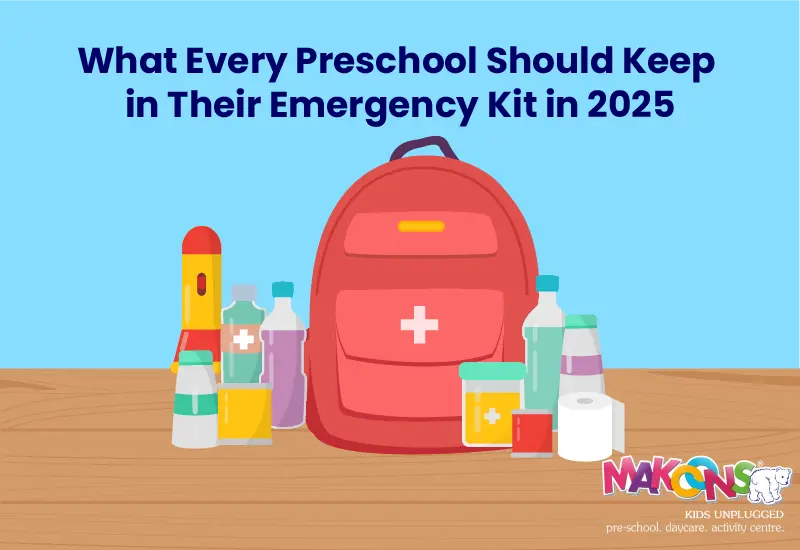
Whenever early childhood education is in question, its safety remains a priority. Parents who trust preschools are not only doing so in order to have their children learn but to provide welfare to their children as well. As times change, and more and more natural disasters are on the rise coupled by the unpredictable emergencies, every preschool should be ready with a preschool emergency kit. In 2025, the notion of safety in schools is not confined to the fire drill- it encompasses the entire emergency preparedness in the schools.
This article contains a specification of preschool safety basics 2025, what should be in the emergency kit or how one should maintain it, and why disaster management in the preschool is a subject to pay more attention to.
Why is the Preschool Emergency Kit the Only Way to Go in 2025?
Children are one of the most vulnerable in emergencies. They can panic, forget instructions or fail to communicate their needs effectively as compared to adults. This places the role of educators and administrators in having to plan in advance.
Important reasons are:
- Unpredictable crises Unforeseen disasters Earthquakes, fire, health-related crises.
- Improved disaster awareness- nowadays governments stress on the importance of disaster management in safety options provided to preschools.
- Parental expectations– parents look forward to being assured that the preschools adopt a preschool safety checklist.
- Children-specific needs – small children may have specific needs when it comes to first aid or comfort items compared to regular kits.
Preschool Safety CRAs2025
A proper preschool emergency kit should contain the items that consider the needs of children. Preschool safety essentials 2025 can be summarized as categorized below.
1.First Aid Kit For Preschool
A preschool first aid kit is the base of any first aid kit. It is supposed to include:
- Tapes, gauze, bandage, antiseptic wipes and wound dressing
- Digital thermometer
- Pain relief syrup and oral salts which are child-friendly
- Scissors, tweezers and cotton swabs
- Disposable hand gloves and masks
- Injuries will require ice packs
- Antiseptic cream and burn ointments
- Phone numbers of contacts in case of an emergency and medical history records
2. Child Safety equipment in School
It is more likely to be discovered by everybody and recognized by no one.
Child safety equipment in schools is a surety that the kids are safe in various situations:
- Fire blankets and fire extinguishers
- Carbon monoxide detectors and smoke detectors
- Lighting Emergency exit signage
- Cabinet safety latches and locks on cabinets and drawers holding dangerous products
- The smoke or dust emergency masks are on child sized versions
- Boards on wheels, stretchers (portable) and evacuation chairs (to carry children with special needs)
3. Food and Water Supplies
Children might have to wait in emergencies. Preschools ought to store :
- Drinking water (at least 3 days worth)
- Easy to carry and non perishable snacks such as dry fruits, biscuits, and cereal bars
- Milk or infantile food (in case of younger pre-school children)
- Even disposable cups and plates, spoons
4. Comfort and Psychological support Items
Little children feel upset by emergencies. Preschools are to be included:
- Soft toys/comfort blankets
- Distracting picture books
- Whistles or glow sticks (just to get children calm and to be seen)
5. Hygiene/Sanitation Equipment/Supplies
In protracted emergencies To keep hygienic
Moist wipes and tissue
Hand sanitizers (child proof)
Additional diapers to use with toddlers
This trash bags and disposable gloves
Towels and face masks
6. Power and Essentials of Communication
A critical communication is essential in times of disasters In all emergency kits prescribed to preschoolers, there should be:
Radio powered by battery or powered by solar
High powered flashlights with extra batteries
Portable power banks
A whistle to man this alarm
7. Records and Documentation
In a case of emergency, it will be useful to have student records to ensure that the staff makes informed decisions:
- Duplicates of children medical history and ID cards
- List of emergency contacts to all the children
- Authorization letters about health care treatment
- What allergies, special care needs
Disaster Management in Pre-Schools
In 2025, supporting preschool disaster management is more than equipping with supplies. It includes:
- Periodic drills – A regular drill which includes fire, earthquake, and lockdown drills that takes place on a monthly basis.
- Education of teachers– teachers trained in pediatric first aid and CPR.
- Evacuation plans – way out procedures, simple and clear evacuation plans posted throughout the school and child-friendly.
- Coordination of Local Authorities– cooperation with local fire, health and police departments.
- Parental awareness – frequent communication to parents on policies on safety.
A preschool that incorporates preparedness in its daily operations means that not only is there safety, but parents also develop trust.
Checklist of Preschool Safety
So as not to overlook anything, a 2025 preschool safety checklist:
Child-oriented first aid kit :
- Fire safety equipment (extinguishers, blankets, etc.)
- Reserves of food and water
- The hygiene necessities (sanitizers, diapers, wipes)
- Items to provide comfort and distraction (toys, books)
- Radio, flashlight, power banks
- Record (medical history, contacts in case of emergency)
- Safety gears (stretchers, masks and protective gears)
- Periodic training of staff on safety and holding safety drills
This checklist must also be referenced on a yearly basis in order to check that everything is in good working order.
The Emergency Preparedness in schools: An Increasing Priority
Policymaking and education boards are tightening the laws touching on emergency preparedness in schools. In 2025, safety conditions should be included in the curriculum at the preschools. Easy lessons such as a stop, drop, and roll, or an evacuation walk help the kids respond better.
Moreover, applications designed to notify in case of emergency, parent-child communication in real-time, as well as intelligent security devices, become ordinary. Schools that implement such solutions are viewed as leaders in child safety.
Conclusion
A properly-packed preschool emergency kit is not only a requirement, but a duty. As more people understand the importance of school safety during emergencies, preschools need to access all the preschool safety essentials 2025. With a clear preschool safety checklist, well-stocked with a first aid kit preschool, and investment in child safety equipment in school, institutions will have a safe and secure environment.
Ultimately, the major disaster management goals of preschools are not only response to the emergency but also proactive care and parent reassurance and instilling the sense of safety in the children even at their first years of life.
[sp_easyaccordion id=”2711″






 Twitter